
 doris@jshnbuzzer.com
Tips for Driving SMD Piezo Buzzers in Modern Electronics
 May 21, 2026|
 View:791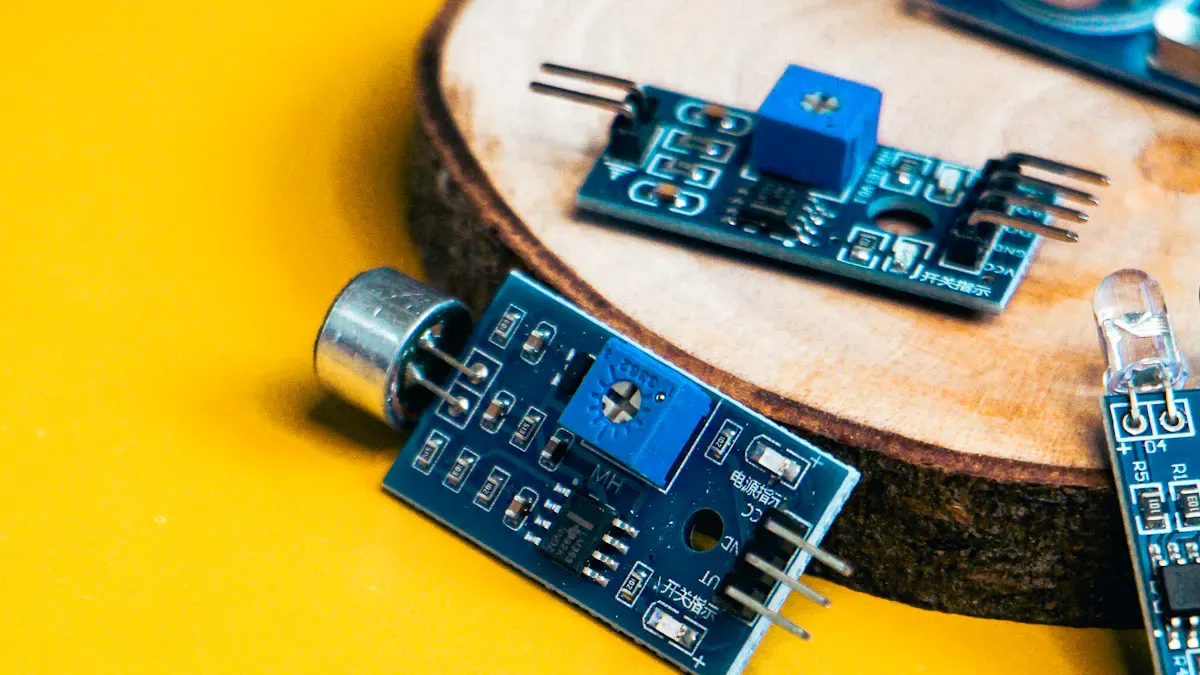
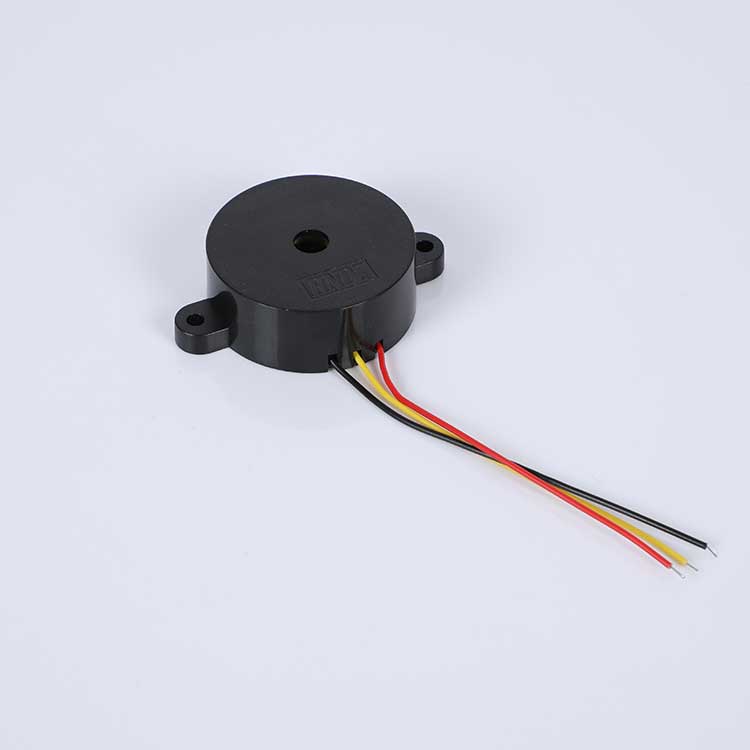
Driving an SMD piezo buzzer effectively is critical in modern electronics design. Self-drive (active) buzzers feature an internal oscillation circuit that simplifies integration and operates at a fixed frequency, while external-drive (passive) types require an external AC signal, providing flexibility in sound and frequency control. Jiangsu Huawha Electronics stands out as a trusted manufacturer, offering compact, reliable SMD buzzers with proven performance. Today, piezo buzzer technology delivers ultra-low power consumption, long life, and dependable alerts for alarms, automotive systems, and consumer devices.
Surface mount convenience
Wide application in modern electronics
Key Takeaways
Choose the right type of piezo buzzer for the project. Self-drive buzzers simplify design, while external-drive buzzers offer advanced sound control.
Match the drive frequency to the piezo buzzer's resonant frequency. This alignment maximizes sound output and electromechanical efficiency.
Use proper components in the buzzer circuit. Select resistors and transistors that meet the application’s voltage and current requirements.
Optimize circuit design for sound pressure. Techniques like push-pull driving and resonant circuits can significantly enhance sound volume.
Ensure reliable performance by considering environmental factors. Secure mounting and proper wiring help maintain the buzzer's longevity.
SMD Piezo Buzzer Selection
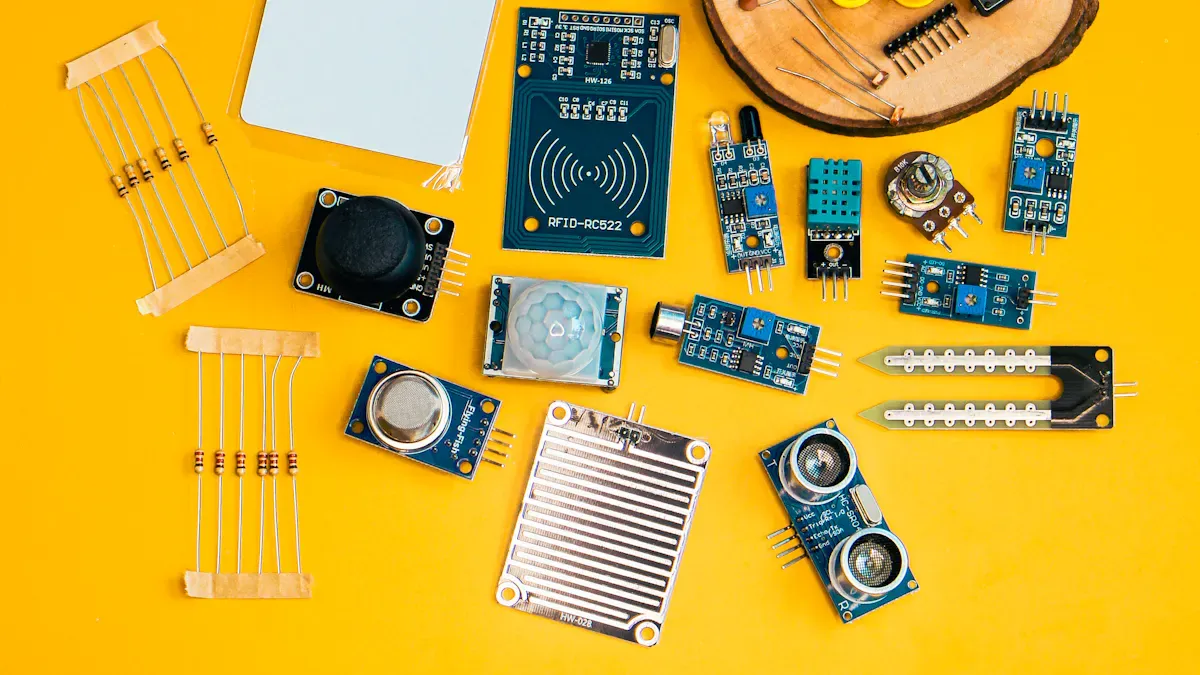
Choosing the right SMD piezo buzzer ensures reliable sound signaling and long-term performance. Huawha Electronics offers a product range that stands out for its compact size, stable performance, and international certifications backed by strict Quality Assurance systems, including ISO 9001 and QS 9000. These buzzers are trusted in a wide range of applications, from home appliances to automotive systems.
Self-Drive (Active) vs. External-Drive (Passive)
Selecting between a self-drive and an external-drive piezo buzzer depends on the design requirements. A self-drive (active) buzzer contains an internal oscillation circuit. It only requires a DC voltage to generate sound at a fixed frequency, simplifying circuit design and reducing the external component count.
An external-drive (passive) piezo buzzer requires an external AC signal or square wave at the desired frequency. This approach provides greater control over the sound output, allowing for tone and volume adjustment. However, it requires a carefully designed driver circuit to match the piezo's electrical characteristics.
Engineering Tip: Selecting the wrong drive type can lead to inadequate sound output, potential damage to the buzzer or driver circuit, or failure to meet the application’s acoustic requirements.
Key Specifications
When selecting a piezo buzzer, several key factors must be evaluated to ensure optimal performance. The table below summarizes the most critical parameters:
Key Factor | Description |
|---|---|
Resonant Frequency | The drive frequency must match the piezo buzzer’s resonant frequency to achieve maximum sound pressure level (SPL). |
Sound Pressure Level (SPL) | Ensure the buzzer’s SPL rating meets the ambient noise requirements of the target application. |
Capacitance | Piezo elements act as capacitors. Measuring capacitance at the drive voltage is crucial for calculating current draw and designing the driver stage. |
Bleeder Resistor | A high-value resistor placed across the terminals discharges residual voltage, preventing DC bias accumulation and silver migration in the ceramic. |
Designers should also verify the recommended acoustic cavity dimensions, follow the SMD footprint guidelines, and confirm reflow soldering compatibility for the assembly process. Always verify that the piezo buzzer meets safety and compliance standards, such as CE and RoHS.
By carefully reviewing these specifications, common design pitfalls can be avoided, ensuring the piezo buzzer delivers consistent, reliable sound in the final electronic design.
Self-Drive SMD Piezo Buzzer (Active)
Basic Drive Circuit
A self-drive (active) piezo buzzer can be driven with a highly simplified circuit. Because it contains an internal oscillator, it only requires a stable DC voltage supply. There is no need to generate a waveform or manage frequency control via the microcontroller. The circuit often connects directly to a power source or a microcontroller GPIO pin.
Adhering to the recommended electrical parameters is essential to achieve optimal sound output and maintain long-term reliability. Typical design values include:
Operating voltage typically ranges from 3V to 24V for standard SMD models, though specific high-voltage designs may vary.
Current consumption usually falls between 1mA and 30mA. This low current profile is ideal for extending battery life in portable devices.
Within the rated range, higher voltage generally increases the sound pressure level, allowing for acoustic tuning based on application needs.
Engineering Tip: Always consult the datasheet to confirm the exact voltage and current specifications. Overdriving the buzzer can lead to premature failure or distorted audio output.
For active piezo buzzers, a direct GPIO drive is often sufficient. This method requires only a GPIO pin, a current-limiting resistor, and occasionally a flyback diode if the circuit includes parallel inductive loads. This topology remains simple and efficient, making it ideal for compact PCB designs.
Essential Components
Selecting the right components for the buzzer circuit guarantees stable operation. The essential parts depend on whether a direct GPIO drive or a transistor driver circuit is utilized. The table below outlines the main architectural options:
Circuit Type | Description |
|---|---|
Direct GPIO Drive | Connects the active piezo buzzer directly to a microcontroller GPIO pin, utilizing a current-limiting resistor to protect the MCU. |
Transistor Driver Circuit | Uses an NPN transistor and a base resistor to switch higher current loads, often used for passive buzzers or high-SPL active models. |
For a direct GPIO drive, a 100 Ω resistor is typically used to limit current, and a flyback diode (such as 1N4148) provides protection against voltage spikes. This setup safeguards both the piezo buzzer and the microcontroller.
If driving a passive piezo buzzer or requiring higher current, a transistor driver circuit is recommended. An NPN transistor like the 2N2222 paired with a 1 kΩ base resistor can handle loads up to 600 mA, which is highly effective for applications demanding maximum sound pressure.
In advanced acoustic designs, full-bridge circuits are frequently employed. These circuits use four switches to double the peak-to-peak voltage across the piezo element. Since acoustic power is proportional to the square of the voltage ($P = V^2/R$), doubling the voltage quadruples the power, resulting in a significant 6 dB increase in sound volume.
Note: Matching the buzzer circuit to the application’s voltage and current requirements is non-negotiable. Proper component selection ensures consistent sound output and prevents thermal failure.
The SMD piezo buzzers from Huawha Electronics are engineered for robust performance, offering stable operation, low power consumption, and seamless integration into complex driving circuits. They are widely deployed in alarm devices, instrumentation, and consumer electronics.
External-Drive SMD Piezo Buzzer (Passive)
When precise control over sound, tone, and frequency is required, an external-drive (passive) piezo buzzer is the optimal choice. Lacking an internal oscillator, it requires an external AC signal or square wave. This approach provides immense design flexibility and allows engineers to optimize sound output dynamically.
Single-Ended Drive
A single-ended drive circuit is the most straightforward topology for operating an external-drive piezo buzzer. One terminal of the piezo is connected to a switching device (such as a transistor or a microcontroller pin), and the other terminal is tied to ground or a fixed bias voltage. A square wave is generated at the resonant frequency of the piezo buzzer to achieve maximum acoustic output.
Microcontrollers can easily generate the required waveform by toggling the output pin at the target resonant frequency. This method is highly effective for basic applications, such as simple alarms or status indicators. However, the voltage swing across the piezo is limited to the supply voltage, which caps the maximum achievable sound pressure level.
Engineering Tip: Piezo buzzers have a very narrow effective bandwidth. Always drive the device at or extremely close to its resonant frequency. Even a minor deviation, such as 100 Hz, can cause a drastic drop in sound output.
Push-Pull Drive
To maximize the performance of an external-drive piezo buzzer, a push-pull (full-bridge) drive circuit is highly recommended. In this configuration, both terminals of the piezo are connected to two independent switching devices. The polarity of the voltage across the piezo is alternated by switching the pins in opposite phases.
This architecture offers several distinct advantages:
The push-pull configuration drives the piezo with both positive and negative voltages. The piezoelectric ceramic warps bidirectionally, significantly enhancing acoustic displacement and sound production.
The effective voltage swing across the piezo device is doubled. This results in four times the power delivered to the transducer, yielding a much louder sound output.
As mentioned previously, a full-bridge circuit can increase the peak-to-peak voltage applied to the transducer, boosting the sound volume by about 6 dB, which is critical in high-noise environments.
A push-pull drive can be implemented using two microcontroller pins set to opposite logic states or by utilizing a dedicated full-bridge driver IC for higher efficiency. This method is ideal for applications requiring high sound pressure, such as security alarms, automotive alerts, and industrial equipment.
Maximizing Output
Extracting the loudest and most efficient sound from an external-drive piezo buzzer requires optimizing both the circuit topology and the operating conditions. Proven techniques include:
Replace the current-limiting resistor in the drive circuit with an inductor. This modification can drastically improve both output and power efficiency.
Select an inductor value that forms a resonant tank with the piezo’s capacitance at its acoustic resonance. This electrical resonance can yield superior acoustic output and higher sound pressure.
Utilize buffered, half-bridge, or full-bridge drivers. These designs significantly increase the effective voltage across the piezo element.
Implement resonant drive circuits. By leveraging the piezo’s capacitance and an external inductor, the voltage across the ceramic can be elevated beyond the supply rail level.
Strictly operate at or near the resonant frequency of the piezo buzzer. This practice maximizes electromechanical efficiency and sound pressure level.
Note: Staying within a narrow tolerance of the resonant frequency is crucial. Frequency deviations can lead to significant drops in sound output and cause the driver circuit to operate inefficiently.
Excellent acoustic results are achieved by combining these techniques. The SMD piezo buzzers from Huawha Electronics fully support advanced drive methods and deliver reliable performance in compact footprints. When the drive circuit is properly optimized, the piezo buzzer will produce clear, loud, and consistent sound for any application.
Sound & Reliability Tips
Sound Pressure Optimization
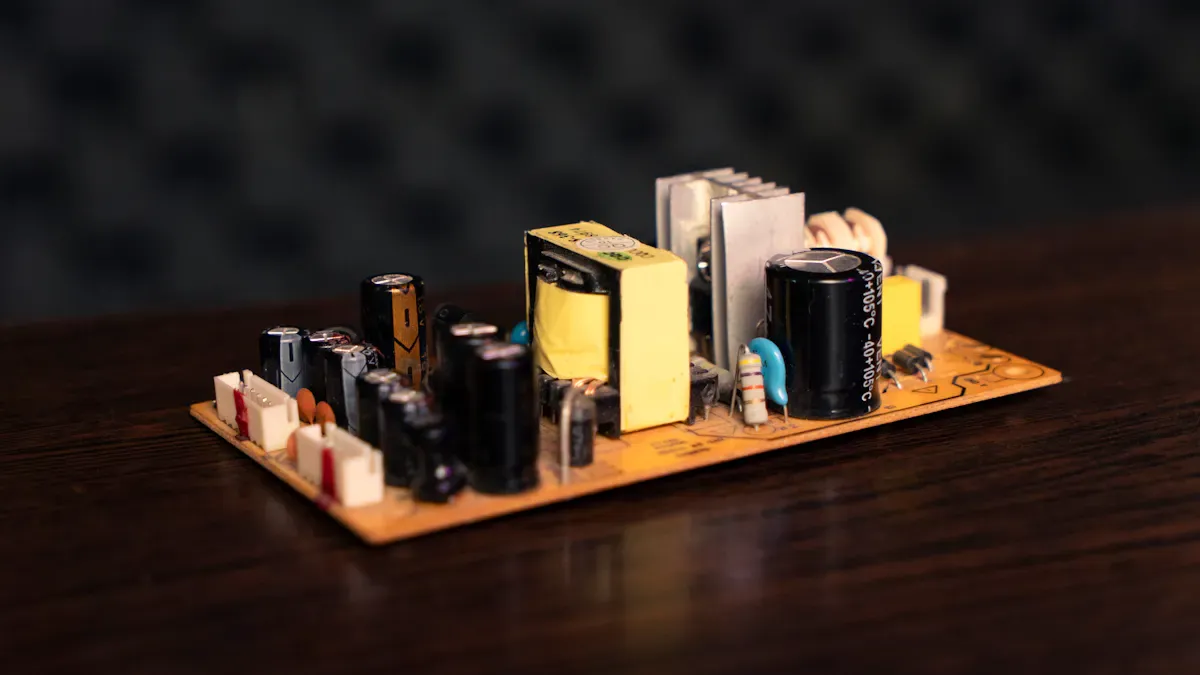
Maximizing the sound output of a piezo buzzer requires adherence to several practical engineering steps. First, match the drive frequency exactly to the resonant frequency of the piezo. This alignment ensures the buzzer produces the highest possible sound pressure level. It is highly recommended to sweep-test the SPL curve of the first production samples to confirm the exact drive frequency. Use a bleeder resistor across the buzzer terminals to discharge residual voltage, preventing DC bias and avoiding silver migration issues within the piezo ceramic. Furthermore, avoid exposing the piezo buzzer to ultrasonic cleaning, as the high-frequency vibrations can fracture the delicate piezo ceramic element. Proper wiring and careful handling during assembly are vital to maintain optimal performance.
Voltage & Frequency
Adjusting voltage and frequency directly dictates the sound output and long-term reliability of the piezo buzzer. Operation must remain strictly within the specified voltage and frequency ranges to avoid weak, distorted, or erratic sound. Excessive voltage can depolarize the piezo ceramic or cause mechanical fracture, while incorrect frequency drastically reduces efficiency. Always refer to the datasheet for recommended operating values. Stable wiring and consistent drive signals help maintain reliable operation. Setting the drive frequency precisely at the resonant point guarantees maximum electromechanical efficiency.
Mounting & Environment
Mounting and environmental factors must be carefully considered to ensure long-term reliability. Huawha Electronics SMD buzzers demonstrate exceptional durability and compliance in harsh conditions. Their rugged construction makes them ideal for automotive alarms, industrial control systems, and medical devices. Secure wiring and correct placement on the PCB help prevent vibration-induced mechanical stress. Avoid mounting the piezo buzzer near sources of excessive heat, moisture, or corrosive gases. Proper environmental protection significantly extends the operational life of the buzzer.
Characteristic | Description |
|---|---|
Sound Pressure Level | SPL measures loudness in decibels (dB), indicating how efficiently the buzzer converts electrical energy into acoustic energy. |
Higher SPL | Typically found in larger buzzers or those driven with higher voltages, designed for high audibility in industrial alarms. |
Lower SPL | Common in smaller, low-power SMD buzzers, perfectly suitable for subtle notification sounds in consumer electronics. |
Frequency Response | Defines the acoustic output range. Piezo buzzers are highly optimized for a narrow band, often between 2 kHz and 5 kHz, to maximize SPL. |
Design Trade-Offs | High SPL buzzers may sacrifice frequency bandwidth for loudness, while broader response designs may sacrifice peak volume for versatility. |
Reliable sound signaling is achieved by optimizing wiring, drive frequency, and mounting techniques. The piezo buzzers from Huawha Electronics offer proven performance, making them a robust choice for demanding electronic designs.
High performance and long-term reliability are achieved by following proven engineering best practices:
Best Practice | Description |
|---|---|
Selection | Choose buzzers rated for the specific environmental conditions and review datasheets for compliance certifications. |
Mounting | Secure buzzers with proper anchoring. Avoid placing them in high-heat areas or near large heat sinks that could detune the resonance. |
Testing | Perform rigorous functional and environmental tests, including vibration, thermal shock, and humidity exposure. |
Integration | Minimize EMI on the PCB and optimize firmware timing to ensure effective, distortion-free alerts. |
Quality Assurance | Inspect solder joints visually and via X-ray to ensure mechanical and electrical integrity. |
Match the power supply precisely to the buzzer’s rated voltage range.
Inspect all PCB traces and wiring for continuity and low resistance.
Confirm that the voltage at the buzzer terminals meets the dynamic requirements during switching.
Avoid overdriving the piezo element to prevent mechanical fracture and audio distortion.
For specific application needs, custom acoustic requirements, or technical support, please contact our engineering team to discuss your design requirements and request a datasheet.
FAQ
How do you choose between self-drive and external-drive SMD piezo buzzers?
A self-drive (active) buzzer is selected for simple circuits requiring fixed tones and minimal external components. An external-drive (passive) buzzer is chosen when the design requires flexible sound control, custom frequencies, or continuous tone variation.
What voltage should be used for SMD Piezo Buzzers?
The operating voltage must be verified against the specific datasheet recommendations. Most standard SMD models operate safely between 3V and 24V. Applying the correct voltage ensures reliable acoustic output and protects the piezo ceramic from depolarization or mechanical failure.
Can SMD piezo buzzers be mounted with automated assembly?
Yes, SMD piezo buzzers are specifically designed for standard surface-mount technology (SMT) automated placement. They support standard reflow soldering profiles and fit common PCB footprints, ensuring high-yield manufacturing.
How is sound output maximized from an SMD piezo buzzer?
Maximum sound output is achieved by driving the buzzer exactly at its resonant frequency. Utilizing a push-pull (full-bridge) circuit or bridge driver significantly increases the voltage swing across the element. Additionally, ensuring the buzzer is not mounted near sources of vibration or heat, and providing an adequate acoustic cavity, will optimize performance.