

 doris@jshnbuzzer.com
Active vs Passive Piezo Buzzers vs Electromagnetic Buzzers: How to Choose in 2026
 Jan 29, 2026|
 View:1237
As electronic devices continue to evolve in 2026, sound signaling components remain critical for user interaction, safety alerts, and system feedback. From consumer electronics and industrial equipment to automotive and medical devices, buzzers play an essential role in delivering clear and reliable audio signals.
Among all options, Passive Piezo Buzzers, Active Piezo Buzzers, and Electromagnetic Buzzers are the three most widely used technologies. However, many buyers still struggle with one key question:
Which buzzer type is the right choice for my application?
Choosing incorrectly can lead to higher power consumption, poor sound performance, compatibility issues, or unnecessary cost. This article provides a clear, practical comparison to help engineers, product managers, and procurement teams make the right decision.
With decades of experience in buzzer manufacturing, Jiangsu HUAWHA Electronics Co., Ltd. offers a broad range of piezo and electromagnetic buzzer solutions designed for modern applications.
Key Takeaways
Active Piezo Buzzers are easy to use and ideal for simple alert systems
Passive Piezo Buzzers offer greater sound flexibility and frequency control
Electromagnetic Buzzers deliver louder sound at lower frequencies
Power consumption, driving method, and sound requirements determine the best choice
Selecting the right buzzer improves product reliability and user experience
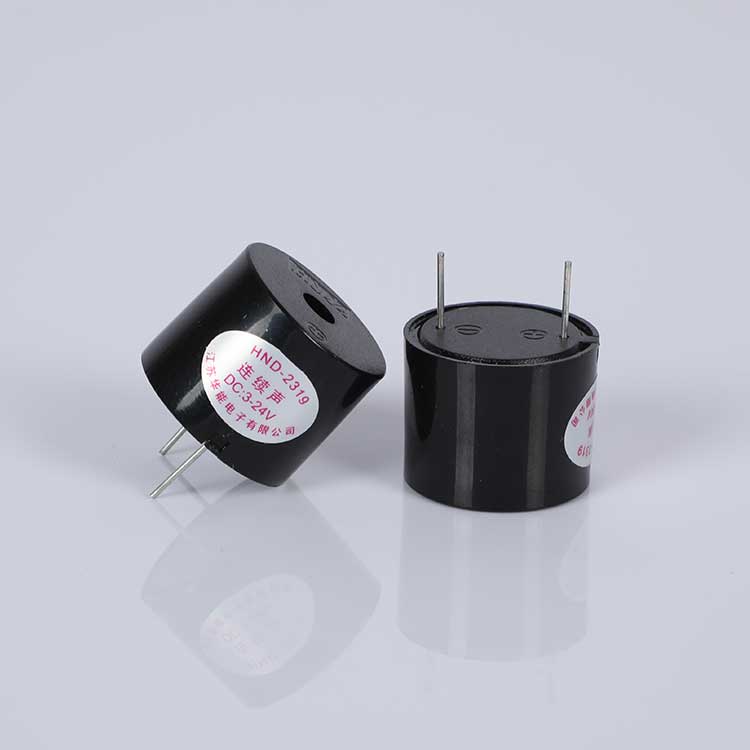
Understanding the Three Main Buzzer Types
Before comparing performance, it’s important to understand how each technology works.
What Are Active Piezo Buzzers?
Active Piezo Buzzers contain an internal oscillation circuit. Once power is applied, they generate sound automatically without requiring an external signal.
Key characteristics:
Simple ON/OFF operation
Fixed frequency output
Stable and consistent sound
They are commonly used in alarms, household appliances, and basic warning systems where simplicity is a priority.
What Are Passive Piezo Buzzers?
Passive Piezo Buzzers do not have an internal drive circuit. Instead, they require an external signal—typically a square wave—to generate sound.
Key characteristics:
Frequency and tone fully controlled by the system
Lower power consumption
More design flexibility
Passive Piezo Buzzers are widely used in smart electronics, IoT devices, and applications requiring melody or variable tones.
What Are Electromagnetic Buzzers?
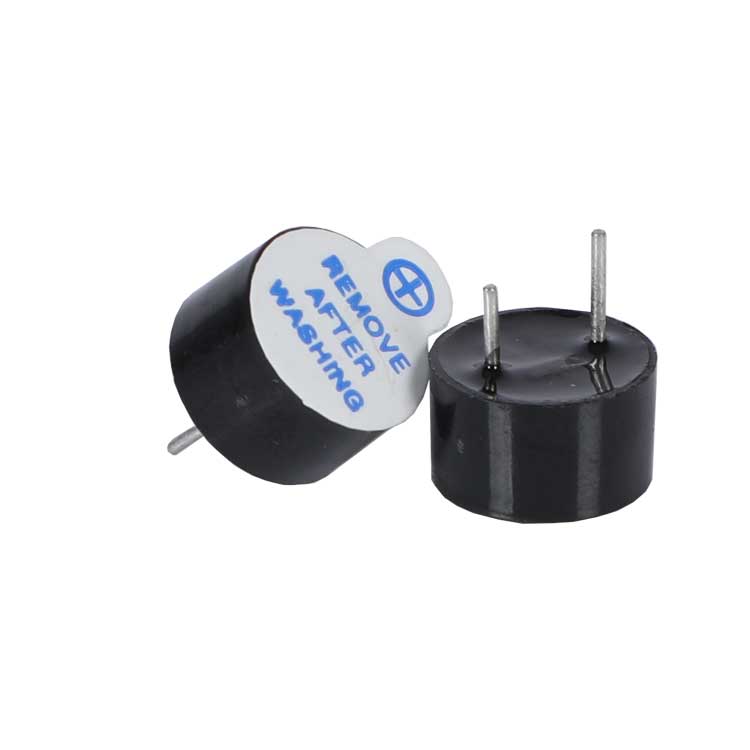
Electromagnetic Buzzers use a coil and diaphragm structure driven by electromagnetic force to generate sound.
Key characteristics:
Strong sound pressure at low frequencies
Warm, mechanical sound profile
Slightly higher current consumption
They are often selected for industrial equipment, automotive alerts, and environments where louder sound is required.
Sound Performance Comparison
Sound output is often the deciding factor.
| Feature | Active Piezo Buzzers | Passive Piezo Buzzers | Electromagnetic Buzzers |
|---|---|---|---|
| Typical Frequency Range | 2–4 kHz | 1–5 kHz (controlled) | 1–3 kHz |
| Sound Pressure Level (SPL) | 80–90 dB | 75–90 dB | 85–95 dB |
| Sound Customization | No | Yes | Limited |
| Tone Quality | Sharp | Flexible | Full / mechanical |
Passive Piezo Buzzers provide the highest level of sound control, while Electromagnetic Buzzers excel in loudness at lower frequencies.
Power Consumption and Driving Mode
Power efficiency is especially important for battery-powered devices.
Active Piezo Buzzers
Operating voltage: typically 3–24V
Low current draw
No external driver required
Passive Piezo Buzzers
Requires PWM or AC signal
Very low average power consumption
Ideal for energy-sensitive designs
Electromagnetic Buzzers
Higher current consumption
Requires sufficient driving capability
Less suitable for ultra-low-power devices
For modern compact electronics in 2026, Passive Piezo Buzzers often provide the best balance between sound control and efficiency.
Application-Based Selection Guide
| Application Type | Recommended Buzzer |
|---|---|
| Consumer Electronics | Passive Piezo Buzzers |
| Simple Warning Alarms | Active Piezo Buzzers |
| Industrial Equipment | Electromagnetic Buzzers |
| Medical Devices | Passive Piezo Buzzers |
| Automotive Alerts | Electromagnetic Buzzers |
Manufacturers like Jiangsu HUAWHA Electronics Co., Ltd. design buzzer products specifically optimized for these application scenarios, ensuring stable performance and long service life.
Reliability and Lifespan Considerations
Piezo-based buzzers have no moving mechanical parts, resulting in longer operational life
Electromagnetic Buzzers include moving components, which may wear over time
Environmental factors such as temperature, humidity, and vibration should be considered
For long-term reliability, Passive Piezo Buzzers and Active Piezo Buzzers generally outperform electromagnetic designs.
Why Manufacturer Expertise Matters
Selecting the right buzzer is not only about specifications—it’s about consistency, quality control, and engineering support.
Jiangsu HUAWHA Electronics Co., Ltd. specializes in:
Passive Piezo Buzzers
Active Piezo Buzzers
Electromagnetic Buzzers
Multiple driving modes and customization options
With a mature production system and strict quality standards, HUAWHA supports global customers in developing reliable acoustic solutions for 2026 and beyond.
How to Choose the Right Buzzer in 2026
Ask yourself these key questions:
Do I need a fixed tone or programmable sound?
Is power consumption critical?
How loud does the buzzer need to be?
What driving signal is available in my system?
Answering these questions will naturally guide you toward Active Piezo Buzzers, Passive Piezo Buzzers, or Electromagnetic Buzzers.
FAQ: Choosing the Right Buzzer
What is the main difference between active and passive piezo buzzers?
Active Piezo Buzzers generate sound automatically, while Passive Piezo Buzzers require an external signal.
Which buzzer is best for low-power devices?
Passive Piezo Buzzers are typically the most power-efficient.
Are electromagnetic buzzers louder than piezo buzzers?
Yes, Electromagnetic Buzzers usually provide higher sound output at lower frequencies.
Can piezo buzzers play melodies?
Only Passive Piezo Buzzers can generate melodies through external control.
Which buzzer type has the longest lifespan?
Piezo-based buzzers generally last longer due to fewer moving parts.
Recommended Products

MLT-4020 Electromagnetic Buzzer

MLT-9650Y Electromagnetic Buzzer

MLT-13065Y Electromagnetic Buzzer
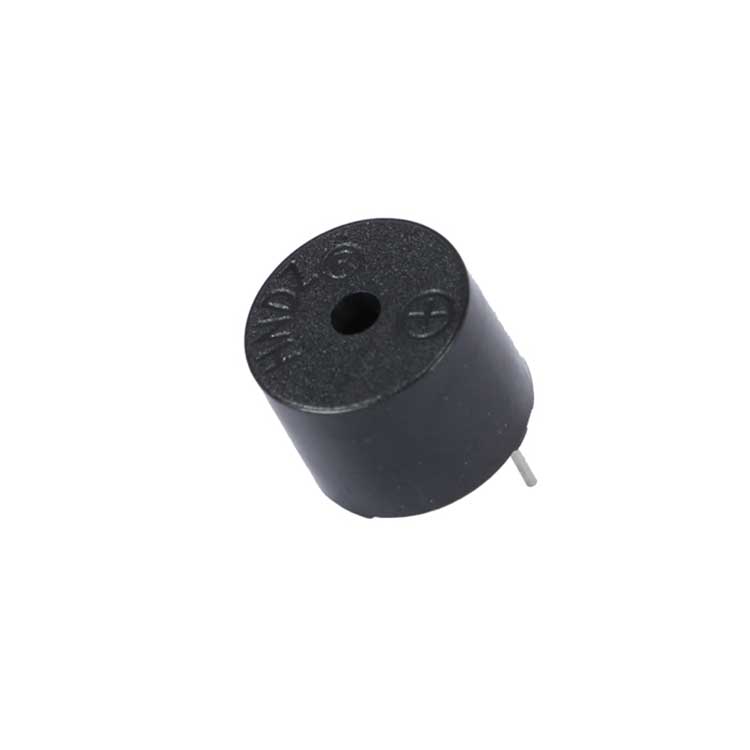
24VDC 88dB Mini Electromagnetic Buzzer

12VDC 88dB Mini Electromagnetic Buzzer

3VDC 85dB Mini Electromagnetic Buzzer

Mini 3.0Vo-p 80dB Electromagnetic Buzzer

HND-4023D piezo buzzer 5v

HND-3215 micro piezo buzzer
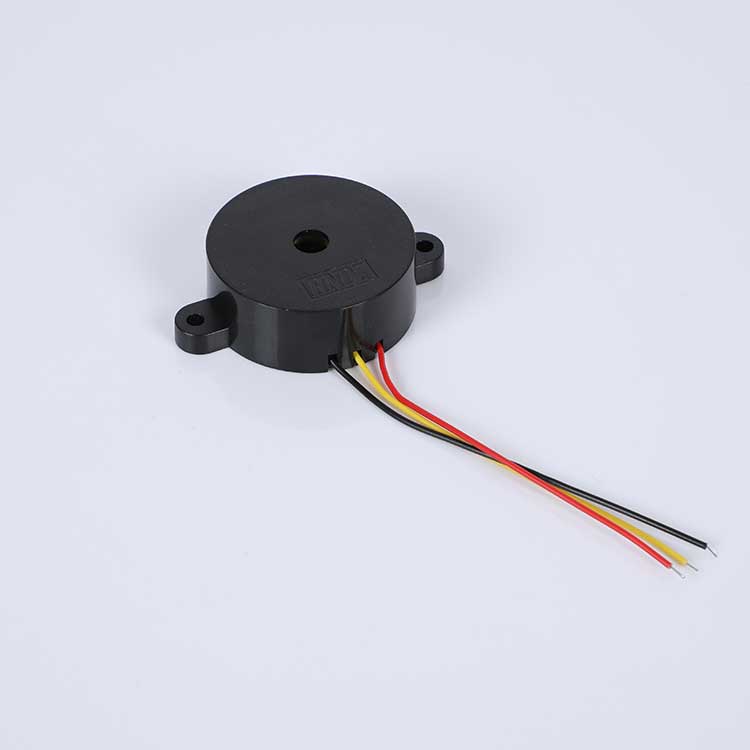
HNR-4216 3 wire piezo buzzer


Recent News
1.What is the lifespan of smd piezo buzzer?
2023-03-282.What material is the pin buzzer made of?
2023-04-043.What's the Difference Between Piezo Buzzers and Electromagnetic Buzzers?
2023-03-234.What's the difference between active buzzers and passive buzzers
2023-03-225.How does an electromagnetic buzzer work?
2023-04-186.What is the use of smd magnetic buzzer?
2023-04-207.Applications of Piezo Buzzer: A Complete Guide
2025-09-268.Top 10 peizo buzzer manufacturers in India 2025
2025-09-089.Active Buzzer vs Passive Buzzer: The Core Difference
2025-09-17