
 doris@jshnbuzzer.com
How to Choose the Right Buzzer Manufacturer for Your Project
 May 25, 2026|
 View:350
How to Choose the Right Buzzer Manufacturer for Your Project

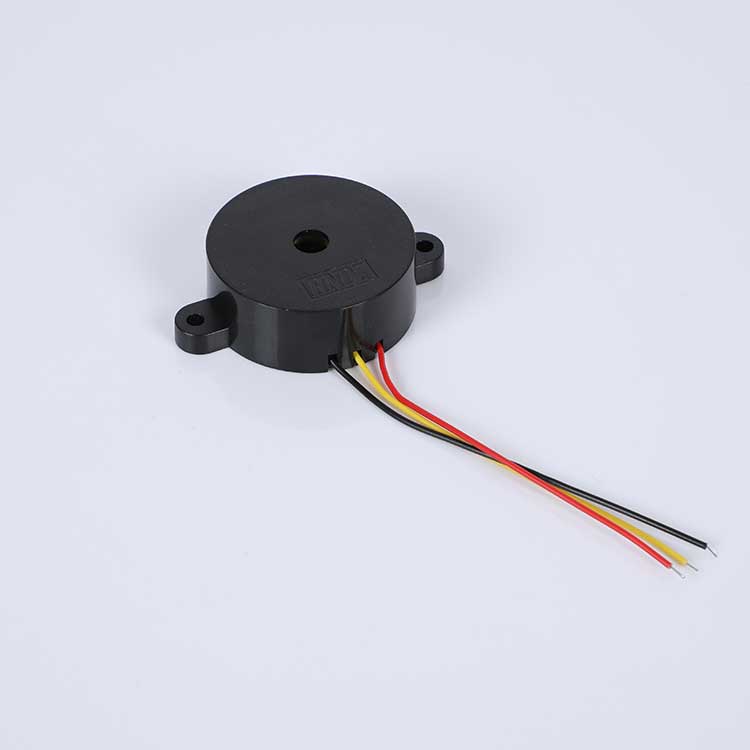
Selecting the right buzzer manufacturer is a critical step in ensuring the reliability and performance of your electronic projects. High-quality buzzers, engineered with advanced materials and automated production processes, offer superior longevity and acoustic performance—especially in demanding sectors like automotive, medical devices, and industrial automation. When evaluating potential partners, prioritize industry certifications, manufacturing capabilities, and proven technical support to guarantee compliance with international standards. Partnering with an established buzzer manufacturer ensures that your components meet rigorous acoustic and electrical requirements.
Key Takeaways
Match your project requirements with the right buzzer type, evaluating sound output, frequency response, and power consumption.
Choose a manufacturer with robust quality assurance and certifications like CE, RoHS, and REACH to ensure global compliance.
Look for partners offering comprehensive customization options to tailor acoustic profiles to your specific PCB layouts and enclosures.
Evaluate the manufacturer’s industry experience, production capacity, and after-sales engineering support to ensure long-term supply chain stability.
Prioritize manufacturers with transparent pricing structures and flexible MOQ (Minimum Order Quantity) policies to optimize your BOM costs.
Project Needs

Buzzer Type Selection
The foundation of a successful design lies in selecting the appropriate transducer. Different applications demand specific acoustic characteristics:
Piezo buzzers are highly efficient, offering high sound pressure levels (SPL) with minimal current draw, making them ideal for battery-powered consumer electronics and medical devices.
Magnetic buzzers utilize electromagnetic principles to produce lower-frequency, broader sound patterns, often preferred in industrial alarms and automotive applications.
Mechanical buzzers, though legacy components, remain relevant in specific heavy-duty industrial signaling.
Transducers and SMD (Surface Mount Device) buzzers provide compact, automated-assembly-friendly solutions for high-density PCB designs.
Selecting the optimal technology ensures reliable acoustic feedback while optimizing power budgets.
Sound Output & Frequency
Acoustic performance is dictated by the resonant frequency and Sound Pressure Level (SPL). The human ear is most sensitive between 2kHz and 5kHz. A piezo transducer tuned to 2.5kHz delivers a sharp, penetrating tone ideal for critical emergency alarms, whereas lower frequencies (e.g., 1.5kHz) are better suited for non-urgent status indicators. In high-noise industrial environments, a higher frequency (4kHz+) with an SPL exceeding 90dB ensures the alert is audible. Designers must also choose between continuous tones for fire alarms and intermittent patterns for appliance user interfaces.
Voltage & Power
Matching the driving voltage and power consumption to your system’s capabilities is essential. The following table outlines typical specifications:
Application Type | Recommended Buzzer | Voltage Range | Power Characteristics |
|---|---|---|---|
Automotive Alerts | Electromagnetic Buzzers | 12V - 24V | Higher current draw, optimized for high SPL in noisy vehicle cabins. |
Medical Devices | Passive Piezo Buzzers | 3V - 5V | Ultra-low power consumption, ideal for battery-operated portable equipment. |
Piezo technology is particularly advantageous in medical and IoT applications due to its high acoustic output at minimal wattage.
Size & Mounting
Physical dimensions and mounting methods dictate mechanical integration.
SMD buzzers are designed for automated reflow soldering, offering robust performance in compact, high-density PCB layouts.
Wire-pin or panel-mount options provide secure mechanical stability in environments subject to heavy vibration or shock.
Larger diaphragm diameters generally yield higher SPL and lower resonant frequencies but require more enclosure volume.
Balancing acoustic output with spatial constraints is critical for modern miniaturized electronics.
Durability & Environment
Electronic components must withstand harsh operational environments. A reliable quality assurance process ensures buzzers meet rigorous environmental standards:
Standard Type | Description |
|---|---|
Housing Material | High-grade engineering plastics or stainless steel covers protect internal elements from physical impact. |
Moisture Resistance | IP-rated sealed enclosures prevent ingress of dust and humidity, crucial for outdoor or medical applications. |
Temperature Tolerance | Wide operating temperature ranges (e.g., -40°C to +85°C) ensure reliability in automotive and industrial settings. |
Compliance | Adherence to RoHS, REACH, and CE directives guarantees environmental safety and market accessibility. |
Manufacturer Capabilities
Product Range
When sourcing components, a diverse product portfolio indicates manufacturing maturity. Jiangsu HUAWHA Electronics Co., Ltd. stands out as a premier acoustic component supplier with over two decades of expertise. Our extensive catalog includes:
Electromagnetic Buzzers
Active & Passive Buzzers
Alarm Systems & Speakers
This comprehensive range allows engineers to source all acoustic solutions from a single, reliable supply chain partner.
Customization Options
Standard off-the-shelf components do not always fit unique design constraints. Leading manufacturers offer extensive ODM and OEM services, allowing customization of resonant frequency, voltage ratings, physical dimensions, and specialized housing materials. Collaborating directly with engineers ensures the transducer perfectly matches your product’s acoustic and mechanical requirements.
Tip: Always request 3D CAD models and sample parts during the prototyping phase to verify mechanical fit and acoustic performance before mass production.
Certifications & Compliance
Global market access requires strict adherence to international standards. HUAWHA’s quality assurance framework guarantees that all products comply with essential directives:
Certification Name | Applicable Region | Core Category | Core Focus |
|---|---|---|---|
CE Certification | EU and EEA | Safety/EMC/Environmental Protection | Overall product compliance for free circulation in the EU |
FCC Certification | United States | Electromagnetic Compatibility (EMC) | Control wireless frequency and electromagnetic interference |
RoHS Certification | EU / Global | Environmental Protection | Restrict hazardous substances like lead and cadmium |
Quality Control
Consistency in mass production is the hallmark of a top-tier manufacturer. Advanced quality control protocols involve automated acoustic testing rigs to verify SPL and frequency for every unit, environmental stress screening, and strict incoming material inspection. Rigorous testing minimizes field failures and protects your brand’s reputation.
Buzzer Manufacturer Reliability

Industry Experience
Experience translates to refined manufacturing processes and deep application knowledge. While global giants like Panasonic, Murata, and TDK have shaped the broader electronic components industry, specialized acoustic manufacturers like HUAWHA bring focused expertise. With over 20 years of dedicated experience in the acoustic field, HUAWHA understands the nuanced challenges of piezo and electromagnetic transducer design, offering agile solutions that larger conglomerates may not provide.
Evaluating Reliability Through Audits
In B2B procurement, reliability is verified through factory audits, ISO certifications, and proven track records rather than generic testimonials. When assessing a partner, request their ISO 9001 certification to demonstrate a standardized quality management system. Additionally, ask for application case studies showing successful deployments in similar industries, and review their failure rate data (PPM - Parts Per Million). Top manufacturers track PPM to continuously improve production lines. A transparent manufacturer will willingly share these metrics to prove their supply chain stability.
Reputation & Innovation
A manufacturer’s market reputation is built on technological innovation, consistent lead times, and strategic industry partnerships. Companies that invest in R&D for new piezo materials or automated SMT assembly lines demonstrate a commitment to future-proofing their clients' products. Choosing a reputable partner ensures you receive not just components, but ongoing engineering support.
Support & Service
Technical Support
Access to expert technical support accelerates the design phase. A competent manufacturer provides comprehensive datasheets, 3D CAD models, and application notes. Whether you need guidance on driving circuits for active vs passive buzzers or acoustic resonance tuning, direct access to application engineers can prevent costly PCB respins.
Supply Chain Agility and Lead Times
In today’s volatile electronics market, supply chain resilience is critical. HUAWHA maintains strategic raw material reserves and optimized production scheduling to ensure competitive lead times. For standard components, extensive inventory of popular SMD and through-hole piezo buzzers enables rapid dispatch for urgent prototypes and production runs. For custom orders, streamlined engineering workflows ensure that customized transducers are delivered within agreed-upon timelines without compromising quality. By maintaining robust stock levels and transparent communication, we help our clients avoid costly production line delays.
After-Sales Service
Post-delivery support is a cornerstone of long-term partnerships. Comprehensive after-sales services include technical troubleshooting, failure analysis, warranty handling, and rapid replacement protocols. Knowing that your manufacturer stands behind their products provides peace of mind and secures your investment.
Pricing & Value
Cost Transparency
B2B pricing is dynamic, influenced by order volume, material costs, and customization complexity. Reputable manufacturers provide clear, tiered pricing structures rather than opaque quotes. To obtain a detailed price list and quotation, consider the following cost drivers:
Cost Driver | Impact on Pricing | Optimization Strategy |
|---|---|---|
Order Volume (MOQ) | Higher volumes significantly reduce per-unit costs. | Consolidate orders or forecast annually for better tier pricing. |
Customization Level | Custom tuning or housing incurs NRE (Non-Recurring Engineering) fees. | Utilize standard catalog items where possible to minimize NRE. |
Certifications | Specific regional testing adds to validation costs. | Verify if the manufacturer already holds the required global certifications. |
Warranty & Partnership Potential
A robust warranty policy reflects a manufacturer’s confidence in their production quality, typically covering defects in materials and workmanship. Beyond transactional purchasing, strategic partnerships facilitate Early Supplier Involvement (ESI). Collaborating closely with your buzzer manufacturer during the design phase is invaluable for integrating acoustic components into IoT platforms and next-generation automotive interfaces, ensuring your products remain competitive.
Selecting the right buzzer manufacturer requires a holistic evaluation of technical capabilities, quality systems, and supply chain reliability. Use the following checklist to streamline your vendor assessment:
Comprehensive product portfolio and R&D capabilities.
Strict adherence to ISO, RoHS, REACH, and CE standards.
Transparent pricing and flexible MOQ options.
Proven industry application history and technical support.
A reliable manufacturing partner not only meets your immediate project specifications but also contributes to the long-term success and scalability of your product line.
FAQ
What are the main differences between an active buzzer and a passive buzzer?
Active buzzers contain an internal oscillating circuit, requiring only a DC voltage to produce a fixed tone. Passive buzzers lack this circuit, requiring an external AC or PWM signal to generate sound, offering greater flexibility in frequency tuning for complex audio patterns.
How do I choose the right buzzer specifications for my project?
Critical parameters include rated voltage, resonant frequency, SPL (at a given distance), capacitance, and operating temperature range. Always cross-reference these with your circuit design and mechanical enclosure constraints.
Can I request customization capabilities for my buzzer order?
Yes, leading manufacturers offer extensive customization, including frequency tuning, voltage adjustments, and custom housing dimensions to fit unique enclosure constraints.
What applications use buzzers for alert functions?
Buzzers are ubiquitous in human-machine interfaces (HMIs), providing auditory feedback in medical equipment, automotive dashboards, industrial control panels, and consumer appliances.
How do I test a buzzer before installation?
Pre-installation testing involves applying the rated voltage (for active) or a square wave signal (for passive) and verifying the acoustic output using a sound level meter and oscilloscope to ensure frequency accuracy and SPL compliance.