
 doris@jshnbuzzer.com
Mechanical vs Piezoelectric Buzzers How to Choose the Right Component
 Aug 10, 2026|
 View:291
Magnetic vs. Piezoelectric Buzzers: Which Should You Choose?
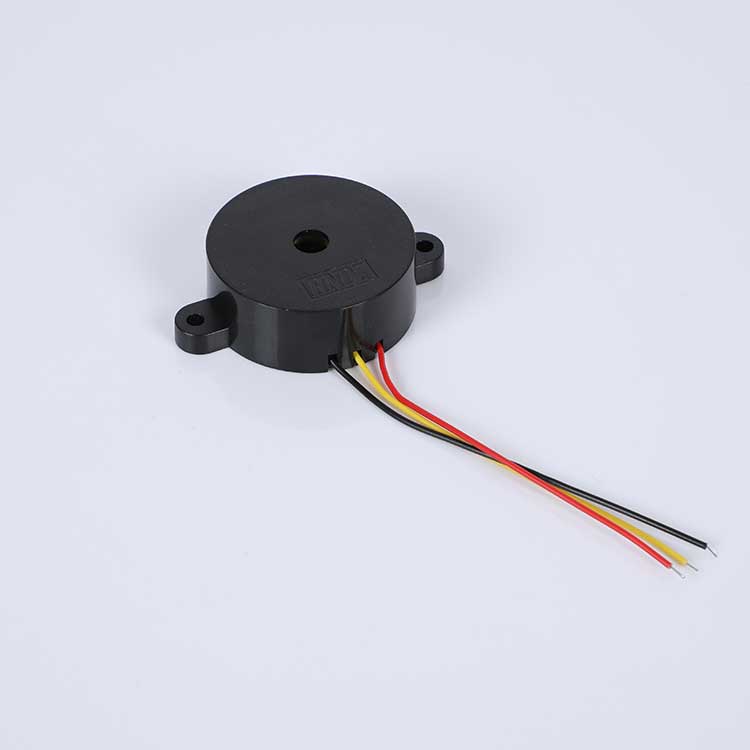
Selecting the correct acoustic component requires matching design priorities to hardware specifications. A magnetic buzzer suits low-pitch audio demands and higher current tolerances. Conversely, a piezoelectric buzzer excels in low power consumption, high frequency output, and high sound pressure level performance. Circuit designers must evaluate board footprint, operating voltage, drive mode, and power budget early during development. Deciding between active and passive buzzers directly impacts board space and external driving circuitry requirements. A piezo element buzzer fits compact, energy-restricted systems. Meanwhile, magnetic acoustic devices generate clear signal tones across standard hardware configurations. Proper component selection optimizes system performance without compromising strict power constraints.
Key Takeaways
Magnetic buzzers produce clear low-pitched sounds between 1 kHz and 3 kHz.
Piezoelectric buzzers generate high-pitched tones up to 120 dB with minimal power draw.
Active buzzers play built-in tones instantly from standard DC voltage connections.
Passive buzzers allow custom sound frequencies using external circuit signals.
Small piezoelectric models save battery life in modern portable electronic devices.
Sound Generation Mechanisms
Magnetic Buzzer Mechanics
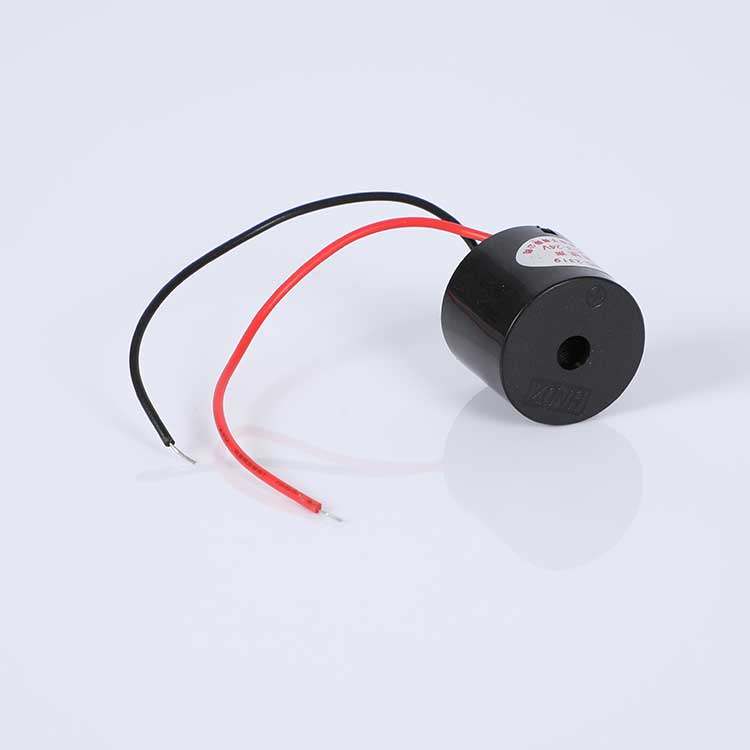
Modern magnetic acoustic components rely on electromagnetic induction to generate clear signaling tones. An internal electromagnetic coil works in tandem with a permanent magnet to vibrate a ferromagnetic diaphragm. This continuous high-frequency vibration pushes air to create resonant audio signals without any physical striking or moving contacts.
Magnetic Bias: A permanent magnet provides a constant magnetic field, keeping the ferromagnetic diaphragm slightly tensioned.
Electromagnetic Induction: An alternating current (AC) or square wave signal flows through the internal coil, generating a fluctuating magnetic field.
Diaphragm Vibration: The fluctuating magnetic field attracts and repels the diaphragm, causing it to bend and vibrate rapidly at the target frequency.
Acoustic Resonance: The vibrating diaphragm displaces surrounding air molecules, while the internal cavity amplifies specific resonant frequencies to produce clear sound.
Piezo Element Buzzer Mechanics
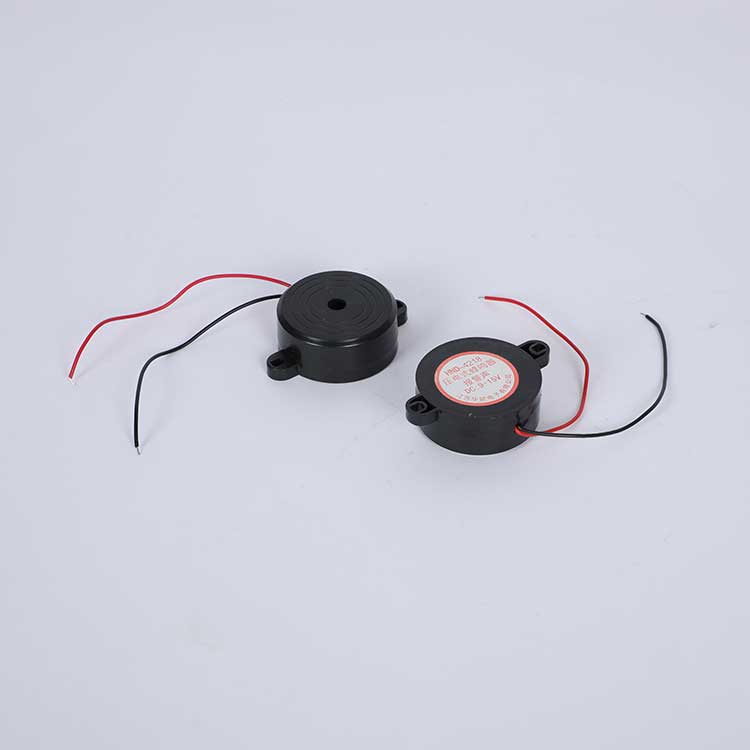
A piezo element buzzer relies on solid-state material properties rather than magnetic fields. Applying voltage to the ceramic disk induces mechanical stress, which produces precise high-frequency sound waves.
Alternating current voltage applies directly to the electrodes of a ceramic disc.
The applied voltage forces the piezoelectric ceramic to expand and contract rapidly through the reverse piezoelectric effect.
Rapid dimensional changes in the ceramic force a bonded metal diaphragm to bend back and forth continuously.
The vibrating diaphragm displaces surrounding air molecules to generate high-pitched acoustic signals.
Engineers select between active and passive drive configurations based on circuit design requirements. Jiangsu HUAWHA Electronics Co., Ltd. manufactures both configurations to support diverse system designs.
Characteristic | Active Buzzer | Passive Buzzer |
|---|---|---|
Internal Circuitry | Contains built-in driving circuit | Lacks internal oscillating circuit |
Driving Signal | Operates with constant DC voltage | Requires external square wave signal |
Sound Generation | Emits fixed tone when powered | Produces variable frequencies |
Ease of Use | Simple plug-and-play operation | Requires external PWM signal control |
An active piezo element buzzer simplifies system programming. Passive buzzers allow precise frequency tuning for multi-tone signaling.
Key Technical Specifications
Evaluating hardware specifications ensures optimal component selection for your target application. Engineers must compare frequency profiles, acoustic intensity, electrical power budgets, and mechanical footprint parameters.
Pitch Frequency and SPL Output
Operating frequency directly dictates human audio perception and signal distance. Magnetic acoustic devices typically generate lower tones ranging from 1 kHz to 3 kHz. Piezoelectric components produce higher tones between 2 kHz and 6 kHz.
Human auditory sensitivity peaks within the range of 2 kHz to 4 kHz. Operating within this frequency window maximizes perceived loudness. Higher tones near 3 kHz or 4 kHz cut through surrounding environmental noise effectively. Conversely, lower tones around 1.5 kHz deliver softer warning notifications.
The human audible frequency range spans from 20 Hz to 20 kHz. However, human hearing is most sensitive between 2 kHz and 4 kHz. For this reason, most piezoelectric sound components are engineered to resonate within this highly perceptible frequency window.
Maximum acoustic power varies based on internal driving mechanics. Peak efficiency occurs precisely at the component's resonance frequency. Designing driving circuits around resonance yields the maximum sound output.
Parameter | Magnetic Acoustic Component | Piezoelectric Acoustic Component |
|---|---|---|
Resonant Frequency Range | 1 kHz to 3 kHz | 2 kHz to 6 kHz |
Typical SPL Output (at 10cm) | 70 dB to 95 dB | 85 dB to 120 dB |
Pitch Characteristic | Low-pitch magnetic acoustic signal | High-pitch acoustic signal |
Power Draw and Operating Voltage
Power budget constraints dictate driving architecture choices. A piezo element buzzer requires minimal electrical energy while operating across wide voltage ranges. Magnetic alternatives pull higher current to drive internal electromagnetic coils.
Operating voltage flexibility differs drastically between component classes. Piezoelectric models operate efficiently between 3V and 250V. Electromagnetic units usually run between 1.5V and 12V. Hardware designs commonly utilize standard system supply lines including 5VDC, 12VDC, or 24VDC rail voltages.
Current consumption varies by driving circuitry and operational mode. Passive magnetic models feature a low internal coil resistance around 16 Ω, drawing approximately 36 mA during operation. Active options with integrated internal oscillators limit draw to ≤ 25 mA. Piezoelectric options consume less than 10 mA across standard DC voltage inputs.
Parameter | Magnetic Component | Piezoelectric Component |
|---|---|---|
Operating Voltage Range | 1.5V to 12V | 3V to 250V |
Typical Current Draw | 20 mA to over 60 mA | Less than 10 mA |
Component mounting styles affect overall board layouts and manufacturing processes:
Surface Mount (SMD): Compact options save valuable space on dense printed circuit boards.
Pin-Type: Pin designs simplify installation directly into targeted circuit board sockets.
Through-Hole: Standard leaded options provide robust mechanical anchorage for rugged hardware applications.
Selecting appropriate buzzers requires matching footprint options to physical enclosure limits. Compact consumer devices benefit from space-saving SMD profiles. Industrial control panels favor pin-type or leaded options for strong mechanical stability. Matching physical mountings and voltage profiles guarantees long-term reliability for all electronic buzzers across diverse operating environments.
Application Selection Guide
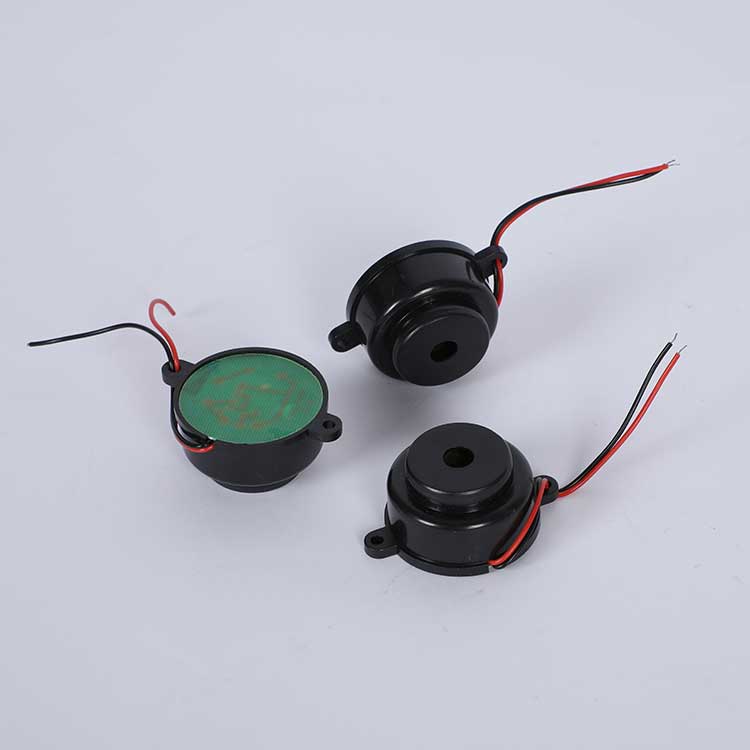
Selecting an acoustic indicator depends directly on operational environment requirements and regulatory standards. System designers must match physical component traits to end-use realities. Environmental hazards like temperature shifts, vibration levels, and power limits dictate component choices across both heavy industrial machinery and lightweight handheld devices. Choosing the appropriate design prevents early component failure in demanding field conditions.
Industrial and Automotive Applications
Industrial and vehicle systems operate under extreme physical stress. Vehicle systems experience broad temperature shifts from -40°C to over 100°C. Engineers choose components with sealed housings to block humidity, dust, and electrical transients effectively. Designing automotive circuit boards requires Surface-Mount Device packages for high-volume automated assembly. Stabilizing using epoxy potting or mounting clips dampens heavy chassis vibrations. Testing protocols utilize accelerometers during vibration evaluation per IEC 60068-2-6 guidelines. Adding ferrite beads on power supply lines controls electromagnetic interference caused by drive currents.
Deploying audible alarms in medical equipment requires strict compliance with IEC 60601-1-8 guidelines to guarantee patient safety and clear signaling.
Medical systems, industrial uninterruptible power supply systems, and electric bicycles demand high manufacturing quality. Quality management systems like ISO 9001 and ISO 13485:2016 form the baseline for clinical equipment production. Standard ISO 13485 acts as the recognized consensus standard for regulatory purposes across global health markets. Standard IEC 60601 establishes overall safety and performance rules for medical devices. Compliance certifications like CE and RoHS confirm adherence to global environmental regulations.
Industrial and Medical Criteria | Engineering Requirement | Reference Standard |
|---|---|---|
Vibration Endurance | Accelerated life testing with vibration testing | IEC 60068-2-6 |
Environmental Tolerance | Survival across -40°C to over 100°C range | ISO 16750-3 |
Quality Management | Standardized medical device quality systems | ISO 13485 |
Medical Alarm Function | Specific audible signal patterns and tones | IEC 60601-1-8 |
Portable and Consumer Electronics
Battery-powered devices require strict energy management to preserve battery life. Portable consumer products like smartwatches, hearing aids, and remote IoT sensor nodes operate on low voltage rails like 3V. Compact designs prefer a piezo element buzzer because it draws very little current compared to heavy electromagnetic designs. Lower power consumption allows small lithium batteries to run extended operating cycles without frequent recharges, protecting portable devices against rapid power drain.
Space constraints on high-density circuit boards drive package selection. Rapid electronics miniaturization makes ultra-small acoustic components essential for modern board layouts and clean mechanical integration.
Ultra-miniature 3×3×1 mm SMD packages serve space-constrained wearables and hearing aids.
Compact 5×5×1.5 mm SMD packages suit smartwatches, smartphones, and IoT sensor nodes.
Standard 9×9×3 mm SMD packages provide clear sound output between 85 dB and 90 dB for general electronics.
Small through-hole pin packages measuring 9.5 mm × 4.5 mm fit compact enclosures and drive reliably with microcontroller currents under 25 mA.
Telecommunications hardware, home appliances, and smart toys utilize these compact audio solutions. Engineers integrate active buzzers to save circuit board space by eliminating external oscillator circuits. Electromagnetic options draw higher currents due to their internal coil mechanisms, creating battery drain challenges in small devices. Surface-mount technology provides reliable mechanical attachment and streamlined automated placement. System designers evaluate sound output, mounting footprints, and energy consumption to select the most reliable buzzers for their target product application.
Selecting acoustic components requires balancing electrical constraints with spatial limits. A piezoelectric buzzer provides high output with low current consumption. A magnetic buzzer produces clear low-pitch tones across standard low-voltage rails.
Parameter | Piezoelectric Device | Magnetic Device |
|---|---|---|
Frequency Range | 2 kHz to 6 kHz | 1 kHz to 3 kHz |
Current Draw | Less than 10 mA | 20 mA to 60 mA |
SPL Output | 85 dB to 120 dB | 70 dB to 95 dB |
Operating Voltage | 3V to 250V (5VDC to 24VDC) | 1.5V to 12V |
Drive Options | Active and Passive | Active and Passive |
Select active SMD piezo element buzzer models for energy-restricted designs. Choose passive leaded buzzers for robust industrial hardware. Tailored acoustic buzzers improve total efficiency.
FAQ
What is the main difference between an active and a passive buzzer?
An active buzzer contains an internal driving circuit. It generates sound automatically when you apply a steady DC voltage. A passive buzzer lacks an internal oscillator. It requires an external square wave signal to produce different sound frequencies.
Which buzzer type uses less electrical power?
Piezoelectric buzzers consume significantly less power than magnetic models. A piezo element buzzer typically draws less than 10 mA during operation. This low current draw makes piezoelectric models ideal for battery-powered portable devices.
What standard supply voltages do electronic buzzers support?
Electronic buzzers support common direct current rail voltages across circuit designs. Standard configurations include 5VDC, 12VDC, and 24VDC options. Jiangsu HUAWHA Electronics Co., Ltd. manufactures active and passive buzzers matching these exact system operating voltages.
Can piezoelectric buzzers reach high volume levels in noisy environments?
Yes, piezoelectric acoustic components produce strong audio outputs in loud settings. They generate high-pitched tones between 2 kHz and 6 kHz. Sound pressure levels can reach up to 110dB, providing clear warning signals for critical industrial or medical applications.
What quality certifications apply to HUAWHA acoustic components?
Jiangsu HUAWHA Electronics Co., Ltd. operates under ISO 9001:2015 and ISO 13485:2016 quality management standards. Their facility maintains FDA registration and SGS verification. Additionally, these electronic buzzers comply with international CE and RoHS environmental safety rules.
Conclusion: Partner with HUAWHA for Your Acoustic Needs
Choosing between a magnetic buzzer and a piezo element buzzer ultimately depends on your project's power budget, space constraints, and target frequency. Whether you need the high-SPL penetration of a piezo component or the rich, lower-frequency tone of a magnetic transducer, sourcing from a reliable manufacturer is critical.
Jiangsu HUAWHA Electronics Co., Ltd. specializes in the R&D and manufacturing of both Piezoelectric Buzzers and Electromagnetic Buzzers. Ready to optimize your PCB audio design?Contact our acoustic engineering team today to request free samples and custom acoustic evaluation reports.