

 doris@jshnbuzzer.com
Which Is Better, an Active or Passive Buzzer?
 Nov 03, 2025|
 View:3888
Have you ever stood in front of a gadget and thought, “Why is this thing beeping like that?” Whether you’re working on a DIY electronics project, tinkering with an alarm system, or just curious, you’ve probably seen the little black cylinder with two pins — the buzzer. But here’s the kicker: Not all buzzers are created equal. Specifically, there’s the active buzzerand the passive buzzer, and knowing which one to use can make your life a heck of a lot easier.
In this article, I’ll walk you through everything you need to know about active buzzer vs. passive buzzer—how they work, their advantages and disadvantages, what you should pick depending on your project.
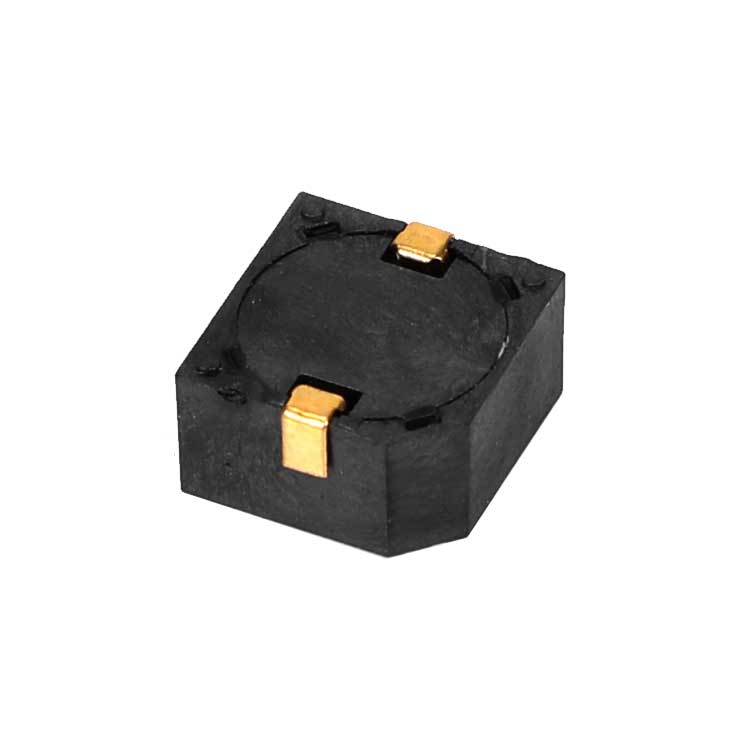
What Exactly Is a Buzzer?
At its simplest, a buzzer is an audio-signalling device that makes a sound when you give it electricity. You’ll find them in alarms, timers, doorbells, electronic toys, and pretty much any gadget that needs to tell you something audibly.
But here’s the twist: when we talk about buzzers, we often mean two specific types — active vs passive. The difference is more than semantics: it affects how you drive them, how easy they are to use, and what they can do.
Understanding the Active Buzzer
What Is an Active Buzzer?
An active buzzer is like the “plug-and-play” buzzer. You apply a DC voltage, and boom — it buzzes. That’s it. No extra work required. It includes a built-in oscillator circuit, so it generates sound by itself.
How It Works
Inside the active buzzer there’s a small circuit that oscillates at a fixed frequency, which drives the piezo (or sometimes electromagnetic) element to vibrate and produce sound. You don’t need to provide the oscillation yourself — only power.
For example, you might see spec sheets like “Active Buzzer 5 V, 85 dB” — meaning you apply 5 V, and it will buzz at that spec by itself.
Pros of Active Buzzers
Very easy to use: You just wire it up and it makes noise.
Great for simple alerts: If you just need “beep!” when something happens, this is ideal.
Consistent tone: Because the oscillator is built in, the tone remains stable.
Lower brain-power required: You don’t need to program frequency changes or worry about generating the tone.
Cons of Active Buzzers
Limited flexibility: You’re mostly stuck with one tone. Want a melody or multiple frequencies? Not likely.
Less control: Because you can’t easily vary the waveform or pitch, your creativity may be limited.
May draw more power: Since there’s internal circuitry, it might draw a bit more than a bare passive unit in some cases.
When to Use an Active Buzzer
You should pick an active buzzer when you need something like:
An alarm that just needs to sound off when triggered.
A timer or reminder beep.
A situation where you don’t want to deal with generating waveforms or controlling pitch.
A low-complexity project where simplicity is key.
Understanding the Passive Buzzer
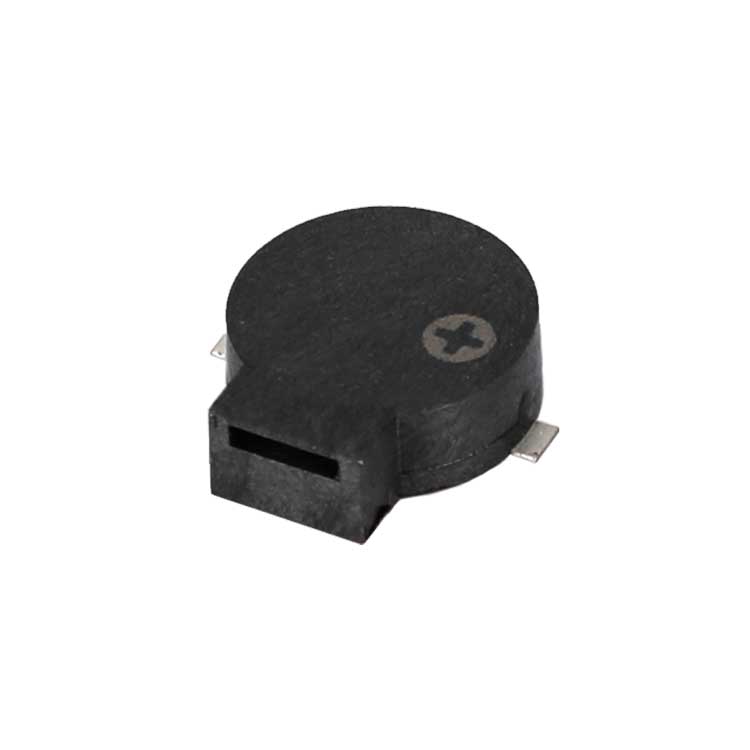
What Is a Passive Buzzer?
A passive buzzer is like the raw musical instrument compared to the active buzzer’s auto-horn. It doesn’t have an internal oscillator — you provide the signal (PWM or other waveform) and it makes sound. So you have control over frequency, duration, melody, etc.
How It Works
You feed a passive buzzer with a varying signal (for example: a microcontroller pin toggling at a certain frequency) and the piezoelectric element inside vibrates accordingly. If you send 1 kHz, it’ll buzz at ~1 kHz; send 2 kHz, it’ll buzz higher. You’re in the driver’s seat.
Pros of Passive Buzzers
Great flexibility: You can create different tones, music, sirens, beeps, etc.
Creative possibilities: If you’re comfortable with a microcontroller or waveform generator, you can make the sound your own.
Potentially more efficient: With no built-in oscillator, sometimes less overhead (depending on how you drive it).
Cons of Passive Buzzers
Requires extra work: You need to generate or supply the signal yourself (via microcontroller, PWM, oscillator, etc.).
Less “plug-and-play”: For a beginner or simple project, this might introduce extra complexity.
Setup matters: If your signal is off or you don’t drive it correctly, you might get no sound or weak sound.
When to Use a Passive Buzzer
Use a passive buzzer when:
You want to produce a melody or multiple tones instead of one tone.
You’re building something more advanced (like a gadget, toy, or custom alarm).
You have a microcontroller or driver that can generate the required signal.
You care about having full control over how it sounds.
Active vs Passive Buzzer: The Key Differences
Here’s a quick comparison to help you see the contrast:
| Feature | Active Buzzer | Passive Buzzer |
|---|---|---|
| Internal Oscillator | Yes | No |
| Signal Required | DC voltage only | PWM/AC or signal needed |
| Tone Control | Fixed | Variable |
| Ease of Use | High | Moderate/Low (depending on skill) |
| Ideal For | Simple alerts/alarms | Multi-tone/melody/custom sound |
| Power Consumption | Slightly higher due to internal circuitry | Often lower (in terms of oscillator overhead) |
| Best For Beginner? | Yes | Maybe if you’re comfortable with microcontrollers |
| Sound Creativity | Limited | High |
So the question isn’t strictly “which is better” — it’s “which is better for your use-case”.
Practical Scenarios: Which to Choose?
Let’s imagine a few real-world examples to help clarify.
Scenario 1: You’re building a microwave oven timer. When the time is up, it needs to beep.
Pick: Active buzzer. Because you just need a beep, and you don’t care about making melodies.Scenario 2: You’re building a toy that plays different sounds when buttons are pressed (e.g., “ding”, “buzz”, “alert”).
Pick: Passive buzzer. Because you’ll want different tones and maybe small tunes.Scenario 3: You create a simple IoT device that sends a notification and you want a loud alert but no programming fuss.
Pick: Active buzzer.Scenario 4: You’re designing a musical alarm clock that plays a custom tone or a short melody.
Pick: Passive buzzer.
How to Identify Which Buzzer You Have
Sometimes a buzzer looks like any other black cylinder with two pins — how do you know if it’s active or passive? Here are a few tips:
Try applying just a DC voltage (e.g., 5 V).
If it buzzes immediately, it’s likely an active buzzer (since it has the oscillator built-in).
If it silently sits, it might be a passive buzzer (which needs a signal to drive it).
Look for labeling or datasheet: Words like “Active Buzzer”, “Self-Drive”, “Requires Drive Signal”, “Passive Buzzer”.
Check the spec sheet: If it lists “drive signal: 2.3 kHz ±10% (external)” or “frequency signal required”, it’s passive.
Look for two pins vs more: Many passive buzzers have two pins but you’ll see they need to be connected to a PWM or AC waveform source.
Spotlight: Jiangsu HUAWHA Electronics Co., Ltd.
Since we’re talking buzzers, let’s highlight a key player in the field: Jiangsu HUAWHA Electronics Co., Ltd..
They are a manufacturer and R&D specialist in buzzers, including both active and passive types.
Products include SMD buzzers, electromagnetic buzzers, piezoelectric buzzers, and their drive modes list both “Active Buzzer” and “Passive Buzzer”.
Their applications span telecommunications, home appliances, automobiles, electric bicycles, UPS systems, alarms, instrumentation, toys, and watches.
They are ISO 9001:2015 certified, and the company emphasizes strong R&D support and diversified products.
So if you’re sourcing buzzers — whether active or passive — HUAWHA is one brand in the field with a strong presence and broad portfolio.
Which Is Better — In My Opinion?
Here’s my take (you’ll call me biased, but I’ll be honest):
If you’re a beginner or you’re building something simple, go with an active buzzer. The simplicity is unbeatable.
If you’re building something more complex — with varying tones, user interactions, or creative sound output — then go passive. The flexibility is worth the extra effort.
In many designs, you might even find both: an active buzzer for the “standard beep” and a passive one for special effects.
Remember: “better” is all about context.
FAQs
Q1: Can I drive a passive buzzer with a DC voltage only?
A: Not really — if you just supply DC, you’ll often get no sound. You need a varying signal, like a PWM or AC waveform, for a passive buzzer to output sound.
Q2: Are active buzzers always louder than passive ones?
A: Not necessarily. Many factors affect loudness (construction, design, voltage, enclosure). However, active buzzers do often provide a reliable and fairly loud tone out of the box.
Q3: If I have a microcontroller like an Arduino, does that mean I should always choose passive?
A: Not always! If you just need a simple beep, active is still fine and easiest. But if you want to produce multiple pitches or melodies, passive is the way.
Q4: Does using a passive buzzer consume more power?
A: It depends. The passive itself might consume less because no internal oscillator, but if your microcontroller is generating high-frequency PWM or complex waveforms, then the overall system might draw more power. Overall: check your circuit design.
Q5: Can I switch a design from active to passive easily?
A: You can, but you need to rethink the driving method. If you replace an active buzzer with a passive one, you’ll need to supply a waveform or PWM. If you replace a passive with an active, you lose the ability to vary tone (and you might have to ensure correct voltage and drive strength).
In Summary — Your Quick Guide
Active Buzzer = Built-in oscillator, “just power it up”, fixed tone, easiest for simple alerts.
Passive Buzzer = No built-in oscillator, needs an external signal, takes more effort, but offers higher flexibility (tones, melodies).
Choose based on your application: Do you just need one beep or do you need custom sound?
Manufacturer like HUAWHA provide quality buzzers in both categories and are worth considering if sourcing components.
Don’t overcomplicate: If you’re unsure, start with active. If you find you need more control, switch to passive.