

 doris@jshnbuzzer.com
Active Buzzer vs Passive Buzzer: The Core Difference
 Sep 17, 2025|
 View:798
If you’ve ever tinkered with electronics, built a DIY Arduino project, or even cracked open a household gadget, chances are you’ve stumbled upon a tiny sound-making device called a buzzer. But here’s the catch—buzzers aren’t all the same. In fact, two main types dominate the market: active buzzers and passive buzzers.
Now you might be wondering: active buzzer vs passive buzzer—what’s the real difference, and why does it even matter? Let’s break it down in plain English, with examples, comparisons, and practical uses so you’ll never mix them up again.
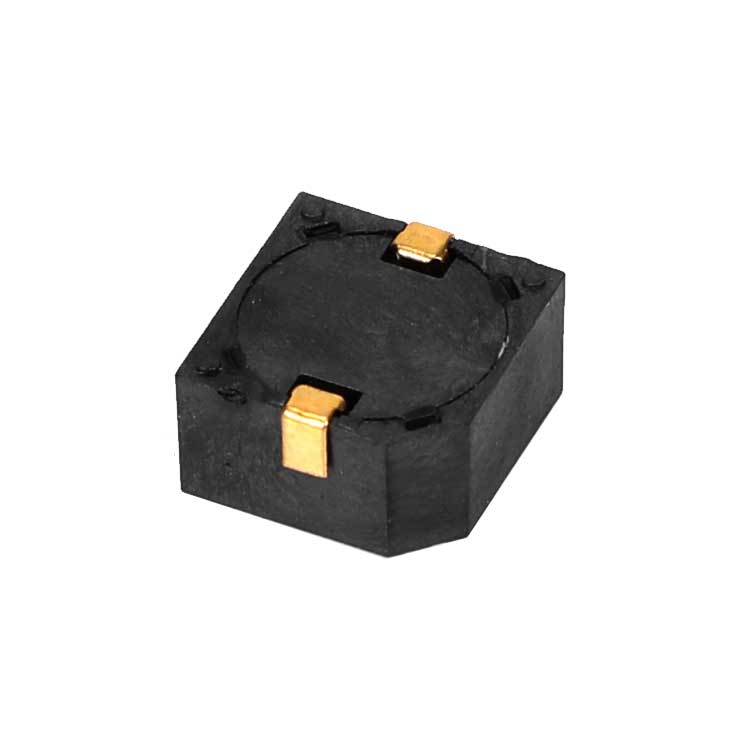
Understanding Buzzers in General
Before we dive into the showdown between active buzzers and passive buzzers, let’s get a quick refresher.
A buzzer is a simple audio signaling device that makes a sound when powered. It works on the piezoelectric principle, where a piezoelectric material vibrates when voltage is applied, producing that familiar beeping sound.
Active Buzzer vs Passive Buzzer: The Core Difference
At the heart of it, the difference is simple:
Active Buzzers: Already have a built-in oscillator. They just need DC power to produce a tone.
Passive Buzzers: Have no oscillator inside. They need an external circuit (like a microcontroller) to generate the sound signal.
Think of it this way:
An active buzzer is like a ready-to-play Bluetooth speaker—you turn it on, and it works.
A passive buzzer is more like an amplifier—it needs input signals to produce sound.
How Active Buzzers Work
Active buzzers are designed for simplicity. Inside, they contain:
A piezoelectric element
A built-in oscillator circuit
When you connect them to a DC supply (usually 3V–12V), they automatically generate a sound, typically a fixed frequency around 2kHz.
In short: Plug it in, and it buzzes!
How Passive Buzzers Work
Passive buzzers are a little more flexible but require extra effort. They lack an internal oscillator, which means:
You have to send them an AC signal or PWM (Pulse Width Modulation) from a microcontroller.
The sound produced depends on the frequency of your signal.
In short: Feed it a signal, and it sings whatever tune you want.
Key Differences: Active Buzzers vs Passive Buzzers
Let’s compare them side by side to make things crystal clear.
1. Internal Circuitry
Active Buzzers: Come with a built-in oscillator.
Passive Buzzers: No oscillator; need external driving signal.
2. Ease of Use
Active Buzzers: Beginner-friendly, just connect to power.
Passive Buzzers: Require coding or signal generation.
3. Sound Output
Active Buzzers: Produce a fixed-frequency tone (monotone).
Passive Buzzers: Produce variable tones, melodies, and even music.
4. Power Consumption
Active Buzzers: Consume more current due to internal circuitry.
Passive Buzzers: Generally more energy-efficient.
5. Applications
Active Buzzers: Best for alarms, reminders, and simple alerts.
Passive Buzzers: Perfect for musical toys, games, and flexible sound design.
Active Buzzer: A Closer Look
Let’s zoom in on active buzzers and see where they shine.
Features of Active Buzzers
Operates with DC voltage
Produces consistent sound
Easy integration in circuits
Compact and low-cost
Advantages of Active Buzzers
Plug-and-play
Reliable performance
Loud and clear sound
Limitations of Active Buzzers
Only one tone—no melodies
Higher power draw than passives
Less flexible for creative applications
Passive Buzzer: A Closer Look
Now, let’s give some love to passive buzzers.
Features of Passive Buzzers
Requires AC signal or PWM input
Frequency depends on driving signal
More control over pitch and tone
Advantages of Passive Buzzers
Can generate multiple sounds
More efficient in power usage
Perfect for musical projects
Limitations of Passive Buzzers
Needs extra circuitry or coding
Less beginner-friendly
Slightly more complex to implement
Applications of Active Buzzers
Where do you see active buzzers in real life? Everywhere!
Alarms (fire alarms, intruder alerts)
Microwave ovens (cooking complete signals)
Washing machines (cycle completion reminders)
Car systems (seatbelt reminders, parking alerts)
They’re all about making sure you don’t miss an alert.
Applications of Passive Buzzers
Now let’s check out where passive buzzers dominate:
Electronic toys (melodies, sound effects)
Game consoles (feedback tones)
Musical greeting cards
DIY Arduino projects (custom sounds)
They’re perfect when creativity and flexibility are needed.
Which One Should You Use?
So, active buzzer vs passive buzzer—which should you choose?
Ask yourself this:
Do you just need a simple beep or alert? Go for active buzzer.
Do you want flexibility, melodies, or custom sound effects? Choose passive buzzer.
It’s really that straightforward.
Technical Comparison Table
Here’s a quick reference table for engineers and hobbyists alike:
| Feature | Active Buzzers | Passive Buzzers |
|---|---|---|
| Oscillator | Built-in | External required |
| Input Signal | DC only | AC / PWM |
| Ease of Use | Very easy | Requires coding/signal |
| Sound | Fixed tone | Variable tones/melodies |
| Power Use | Higher | Lower |
| Best For | Alarms, alerts | Toys, music, projects |
Tips for Using Buzzers Effectively
Always check voltage ratings before connecting.
For passive buzzers, experiment with PWM frequencies for different sounds.
For active buzzers, remember: no code needed—just power supply.
Mount them properly to avoid sound distortion.
Future Trends in Buzzers
As electronics evolve, buzzers are becoming:
Smaller yet louder
More energy-efficient
Integrated with smart devices for IoT alerts
We can expect both active and passive buzzers to remain essential in everything from consumer gadgets to medical devices.
Conclusion
So there you have it—the full story of active buzzer vs passive buzzer.
Active buzzers are simple, reliable, and best for alarms and reminders.
Passive buzzers are flexible, creative, and perfect for music or variable tones.
Next time you hear a beep from your microwave or a melody from a toy, you’ll know exactly which buzzer is behind it. These little sound-makers may be small, but they sure pack a punch when it comes to keeping our world alert and interactive.


Recent News
1.What's the Difference Between Piezo Buzzers and Electromagnetic Buzzers?
2023-03-232.What is the lifespan of smd piezo buzzer?
2023-03-283.How does an electromagnetic buzzer work?
2023-04-184.What are some interesting applications for a 12v piezo buzzer?
2023-04-255.What is the best material to use for SMD magnetic buzzers?
2023-05-116.Small Piezo Buzzer: How to Use and Connect It Correctly
2023-07-13