

 doris@jshnbuzzer.com
How to Judge the Quality of an Active Buzzer
 Dec 18, 2025|
 View:791
When it comes to electronic alert systems, few components are as simple yet as critical as the active buzzer. From home appliances and industrial control panels to medical devices and automotive electronics, active buzzers play a vital role in delivering clear, immediate audio feedback. But here’s the challenge: not all active buzzers are created equal.
So, how do you judge the quality of an active buzzer before integrating it into your product or system? Is it just about sound volume, or does quality go much deeper? In this comprehensive guide, we will break down every essential factor—technical, mechanical, electrical, and environmental—to help you confidently evaluate the true quality of an active buzzer.
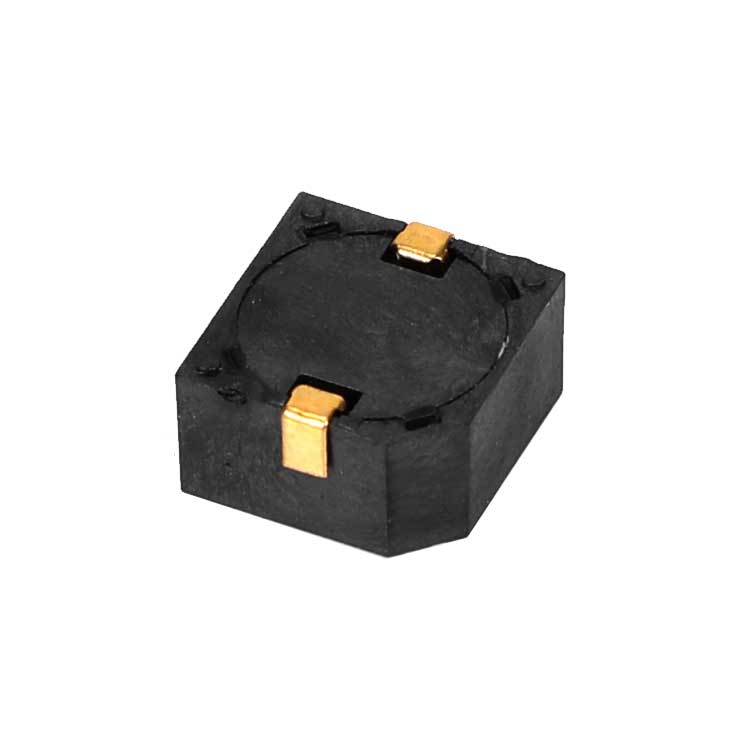
Understanding What an Active Buzzer Is
Before judging quality, it’s important to clearly understand what an active buzzer actually is.
An active buzzer is an electronic sound-producing device that contains an internal oscillation circuit. Unlike a passive buzzer, it does not require an external signal to generate sound. Once power is applied, it produces a fixed-frequency tone automatically.
This built-in simplicity makes active buzzers extremely popular for:
Alarm systems
Warning indicators
Consumer electronics
Industrial equipment
Smart home devices
However, that same simplicity means poor-quality components can easily compromise performance, reliability, and lifespan.
Why Active Buzzer Quality Matters
A low-quality active buzzer might seem acceptable during initial testing, but over time it can lead to:
Reduced sound output
Inconsistent frequency
Premature failure
Increased power consumption
Customer complaints or product recalls
Judging quality correctly at the sourcing or design stage helps prevent long-term costs and reputational damage.
Sound Performance: The First Indicator of Quality
Sound Pressure Level (SPL)
One of the most critical metrics when evaluating an active buzzer is its sound pressure level, usually measured in decibels (dB) at a fixed distance (commonly 10 cm).
A high-quality active buzzer should:
Meet or exceed its rated SPL
Produce consistent loudness across multiple units
Maintain volume stability over time
If the sound output varies significantly from unit to unit, it is often a sign of poor internal component control.
Sound Clarity and Purity
Volume alone does not define quality. A good active buzzer should produce:
A clean, sharp tone
Minimal distortion
No rattling or buzzing noise beyond the intended sound
Muddy, vibrating, or uneven sound often indicates inferior piezo elements, weak housing design, or poor assembly quality.
Frequency Stability and Accuracy
Fixed Frequency Consistency
Active buzzers typically operate at a fixed frequency, such as 2 kHz or 4 kHz. A high-quality active buzzer should:
Maintain a stable frequency under normal operating voltage
Avoid noticeable pitch shifts
Remain consistent across temperature changes
Frequency drift may cause alarms to become less noticeable or irritating to users over time.
Audibility in Real Environments
Quality active buzzers are designed to operate effectively in real-world noise environments. Frequencies that are too low or too high may get lost among ambient sounds.
A well-designed active buzzer balances frequency and loudness to ensure maximum audibility without discomfort.
Electrical Characteristics and Power Efficiency
Rated Voltage Accuracy
Every active buzzer is designed for a specific operating voltage, commonly 3V, 5V, 12V, or 24V.
A quality active buzzer should:
Operate reliably at its rated voltage
Tolerate minor voltage fluctuations
Avoid overheating or distortion under normal conditions
Buzzers that fail or sound abnormal at nominal voltage are clear red flags.
Current Consumption
Lower power consumption without sacrificing performance is a strong indicator of good design.
High-quality active buzzers typically:
Consume stable and predictable current
Avoid sudden spikes
Perform efficiently over long duty cycles
Excessive current draw often indicates poor internal circuitry or inefficient oscillation design.
Build Quality and Material Selection
Housing Material and Structural Integrity
The outer casing of an active buzzer is more than just cosmetic. It directly impacts acoustic performance and durability.
A high-quality active buzzer features:
Rigid, heat-resistant plastic or metal housing
Precise molding without gaps or warping
Strong resistance to vibration and impact
Weak housing can cause sound leakage, distortion, or mechanical failure.
Internal Component Quality
Although internal components are not visible, their quality becomes evident through performance.
Reliable active buzzers use:
High-grade piezo elements
Stable oscillation circuits
Secure soldering and internal connections
Inconsistent sound or early failure often points to substandard internal materials.
Durability and Lifespan Evaluation
Operational Life Testing
One of the best ways to judge active buzzer quality is through endurance testing.
High-quality active buzzers:
Maintain stable sound output after thousands of cycles
Show minimal degradation over extended use
Resist internal fatigue
Low-quality units often show reduced volume or complete failure after prolonged operation.
Mechanical Stress Resistance
In industrial or automotive applications, active buzzers may be exposed to constant vibration.
A reliable active buzzer should:
Withstand mechanical shock
Maintain internal alignment
Avoid loose components
Buzzers that fail under vibration are unsuitable for demanding environments.
Environmental Resistance and Reliability
Temperature Tolerance
A quality active buzzer is designed to operate across a defined temperature range, often from -20°C to +70°C or higher.
Superior models:
Maintain consistent sound in hot and cold conditions
Avoid cracking, warping, or frequency drift
Temperature sensitivity is a common weakness in low-end buzzers.
Moisture and Humidity Resistance
For outdoor or industrial applications, moisture resistance is critical.
High-quality active buzzers may include:
Sealed housings
Moisture-resistant coatings
Corrosion-resistant terminals
Buzzers that fail in humid environments can compromise system reliability.
Consistency Across Production Batches
Batch-to-Batch Uniformity
One often overlooked quality indicator is consistency across large quantities.
A reputable active buzzer manufacturer delivers:
Uniform sound output
Stable frequency across batches
Consistent electrical performance
Large variations between units indicate poor quality control.
Manufacturing Standards
Quality active buzzers are produced under strict manufacturing standards, such as:
ISO-certified processes
Automated testing
Statistical quality control
These processes ensure repeatable performance and long-term reliability.
Ease of Integration and Installation
Pin Configuration and Compatibility
A well-designed active buzzer should integrate easily into your circuit.
Quality indicators include:
Standard pin spacing
Clear polarity marking
Reliable solderability
Poor pin design can increase assembly errors and production costs.
Mounting Stability
Active buzzers should sit securely on the PCB without wobbling or stress.
A stable mounting design improves:
Mechanical reliability
Acoustic performance
Long-term durability
Compliance with Industry Standards
Safety and Regulatory Certifications
High-quality active buzzers often comply with international standards such as:
RoHS
REACH
CE
Compliance demonstrates responsible material use and product safety.
Electromagnetic Compatibility
A well-designed active buzzer minimizes electromagnetic interference, ensuring it does not disrupt nearby electronic components.
This is especially important in medical, automotive, and industrial electronics.
Supplier Reputation and Technical Support
Manufacturer Credibility
Quality assessment doesn’t stop at the component itself. The supplier matters.
A reliable active buzzer supplier typically offers:
Detailed datasheets
Technical support
Stable long-term supply
Unclear specifications or vague documentation often signal low product quality.
Sample Testing and Documentation
Reputable suppliers encourage:
Sample testing
Performance validation
Transparent specifications
This openness reflects confidence in product quality.
Cost vs. Value: Avoiding the Cheapest Trap
While price is always a factor, the cheapest active buzzer is rarely the best choice.
High-quality active buzzers provide:
Longer lifespan
Fewer failures
Better user experience
In most cases, slightly higher upfront cost leads to lower total ownership cost.
Practical Testing Methods for Active Buzzer Quality
Real-World Sound Testing
Test the active buzzer in its intended environment:
Ambient noise
Enclosure conditions
Continuous operation
Real-world testing reveals weaknesses lab tests may miss.
Long-Term Reliability Trials
Running buzzers continuously over days or weeks can quickly expose:
Sound degradation
Thermal issues
Component fatigue
This is one of the most reliable ways to judge true quality.
Common Signs of a Low-Quality Active Buzzer
Be cautious if you notice:
Inconsistent sound output
Excessive heat during operation
Unstable frequency
Weak or distorted tone
Early failure
These symptoms almost always indicate inferior design or materials.
Final Thoughts: Choosing the Right Active Buzzer
Judging the quality of an active buzzer requires more than a quick listen. True quality reveals itself through sound performance, electrical stability, mechanical durability, environmental resistance, and manufacturing consistency.
By carefully evaluating these factors, you can confidently select an active buzzer that delivers reliable alerts, enhances user experience, and supports long-term product success.
In electronic design, small components often carry big responsibility—and the active buzzer is a perfect example. Choose wisely, test thoroughly, and prioritize quality over short-term savings.


Recent News
1.What is the lifespan of smd piezo buzzer?
2023-03-282.What are the advantages of a lead buzzer?
2023-04-113.What material is the pin buzzer made of?
2023-04-044.What's the Difference Between Piezo Buzzers and Electromagnetic Buzzers?
2023-03-235.What's the difference between active buzzers and passive buzzers
2023-03-22