

 doris@jshnbuzzer.com
What is a Mini Piezo Buzzer and How Does It Work
 Jan 12, 2026|
 View:843
A mini piezo buzzer helps you make sound in small gadgets. These buzzers are usually between 10mm and 27mm wide. You can see the sizes in the table below:
Buzzer Size | Diameter Range |
|---|---|
Mini Piezo Buzzers | 10mm to 27mm |
You can use a 12v mini piezo buzzer for alarms or alerts. The buzzer has a piezoelectric material inside. This material shakes and makes noise when you add voltage. Many people pick these buzzers from a Piezoelectric Buzzers supplier. They like them because they work well and are small.
Key Takeaways
Mini piezo buzzers are small devices. They make sound with piezoelectric materials. They work well in small gadgets.
These buzzers save energy. They use less power but give loud alerts. This makes them great for battery devices.
You can pick active or passive mini piezo buzzers. Active buzzers are simple to use. Passive buzzers let you control the sound.
Mini piezo buzzers are tough and last long. They can work for up to 40 years if cared for. This makes them a good choice for many uses.
You see mini piezo buzzers in things like alarms and medical tools. They are also in home appliances. They help these devices work better.
Mini Piezo Buzzer Basics
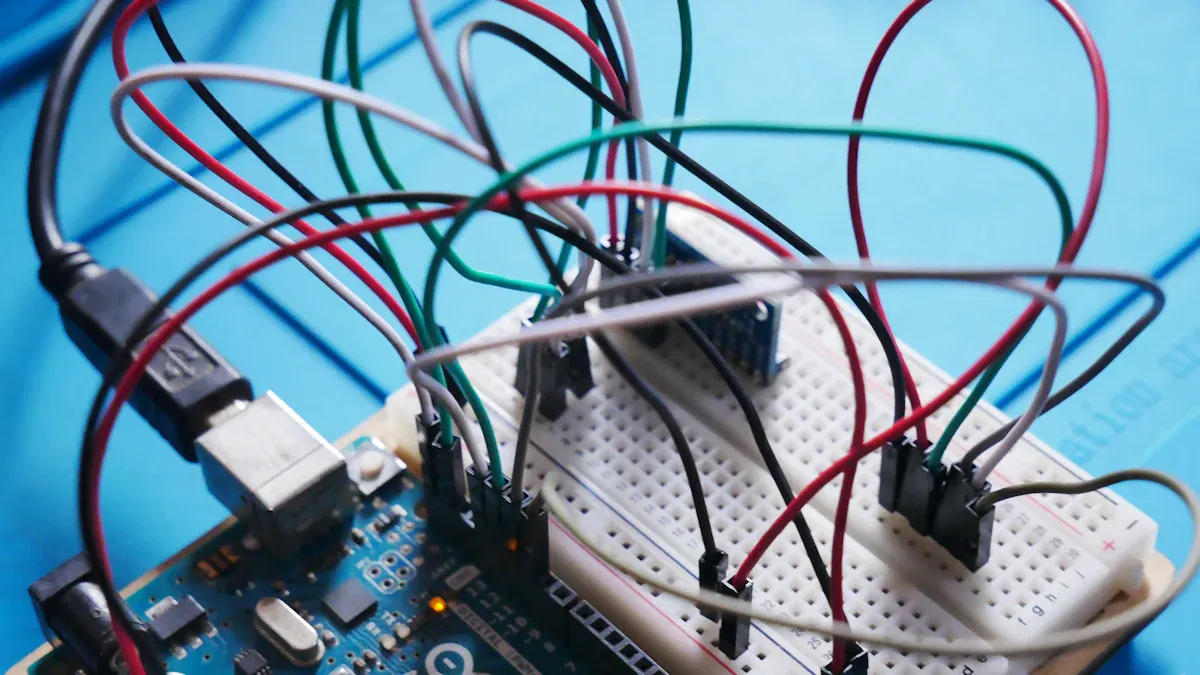
What Is a Mini Piezo Buzzer
A mini piezo buzzer is a small device. It makes sound with a piezoelectric element. This element shakes when you add voltage. The shaking creates noise. The buzzer uses special materials. These materials have atoms that move electrons. Electric fields make the atoms move. This movement helps the buzzer make clear sounds. You can use mini piezo buzzers in many products. They work in alarms, appliances, and medical devices. Their small size fits tight spaces. You can add sound without using much room.
Tip: A mini piezo buzzer gives strong alerts. It does not need much space in your gadget.
Key Features and Construction
Mini piezo buzzers have important features. They are light and small. You can install them in small places. The piezoelectric element is inside the buzzer. It uses advanced technology for good performance. The buzzer has piezoelectric materials. These materials have balanced atoms. This balance helps the buzzer last long.
Here is a table with voltage ranges for some models:
Model | Operating Voltage Range |
|---|---|
PS1240 | 3V to 30V AC |
Audible Piezo Buzzer Alarm | 3-20 VDC |
24V 90dB SMD Piezo Buzzer | 20~26 V |
Mini piezo buzzers are reliable. They keep working well for many cycles. They stay stable and keep their sound. They are strong and resist the environment. But do not put them in very hot, cold, or wet places. These things can hurt the buzzer. Good conditions help the buzzer last up to 40 years. High-quality materials and smart design make them last longer.
Sometimes mini piezo buzzers can fail. For example:
Low voltage can make weak or strange sounds.
Too much voltage can make the sound bad.
Humidity can lower how well it works.
Always check the voltage. Keep the buzzer safe to help it work well.
How Mini Piezo Buzzers Work
Piezoelectric Principle
To understand a mini piezo buzzer, you need to know about the piezoelectric principle. This idea shows how some materials act when you push them or add voltage. These materials are called piezoelectric and have a special feature. If you press or bend them, they make an electric charge. If you add voltage, they change shape and start to shake. Inside a mini piezo buzzer, there is a thin piezoelectric disc. It sits between two metal plates. Wires connect to the disc so you can send voltage through it. The disc bends and starts to vibrate. This shaking moves a membrane that makes sound waves. The kind of piezoelectric part and the membrane change how loud and high the sound is.
Piezo buzzers work because piezoelectric materials make electricity when you press them.
A thin piezoelectric disc is between two metal plates.
When you add voltage, the disc bends and shakes.
These shakes move the membrane and make noise.
Wires help you add voltage and start the shaking.
The disc and membrane decide how loud and high the sound is.
Sound Generation Process
The sound in a mini piezo buzzer starts with the piezoelectric part. You add an alternating current to the wires. The piezoelectric disc gets bigger and smaller. This movement bends the metal part attached to the disc. The metal part shakes at the same speed as the voltage you use. The shaking gets stronger and makes sound waves. The sound hole lets these waves out so you can hear them. Most mini piezo buzzers make sounds between 2 kHz and 6 kHz. You usually hear sounds from 2000 Hz to 4000 Hz in many devices.
The metal part is very important. It makes the shaking from the piezoelectric part stronger. When the disc moves, the metal part bends and shakes. This makes sound waves that move through the air. The mini piezo buzzer can make sounds that are loud and clear.
Here is a table that shows how loud piezo buzzers are compared to others:
Type of Buzzer | Sound Pressure Level (SPL) |
|---|---|
Piezo Buzzers | 85-120 dB |
Magnetic Buzzers | 70-95 dB |
Piezo buzzers are louder and can make more types of sounds. They work with high voltage but do not use much current. Magnetic buzzers are not as loud and use more current.
Passive vs Active Piezo Buzzers
You can pick passive or active mini piezo buzzers. Passive buzzers need an AC signal to work. You must send a changing signal to make sounds. Passive buzzers can use about 36mA of current. Active buzzers have a part inside that makes the signal. You only need to add DC voltage, and they make noise by themselves. Active buzzers use less power, usually 25mA or less.
Active buzzers use 25mA or less.
Passive buzzers need an AC signal and use about 36mA.
If you want easy sound alerts, use an active piezoelectric buzzer. If you want to change the sound, use a passive mini piezo buzzer. Both types use the piezoelectric part to make sound, but they work in different ways.
Tip: Pick the right mini piezo buzzer for your project. Think about how much you want to control the sound and how much power your device has.
Mini Piezo Buzzer Applications

Common Uses in Devices
Mini piezo buzzers are in many things you use every day. They help you hear beeps, warnings, and other sounds. Because they are small, they fit in tiny gadgets. Here are some places where you find mini piezo buzzers:
Alarm systems like smoke detectors and security panels
Medical equipment such as infusion pumps
Vending machines that beep for alerts
Home appliances like washing machines and microwaves
Consumer electronics such as smartphones and tablets
Car warning systems like seatbelt reminders and door alerts
Industrial machines for warning and emergency sounds
Fitness trackers that buzz for notifications
Tip: If something beeps or buzzes to warn you, it probably uses a mini piezo buzzer.
Benefits in Compact Electronics
Mini piezo buzzers are great for small electronics. Their shape helps save space and power. You can count on them for clear sound and long life. The table below shows how these buzzers make your gadgets better:
Feature | Description |
|---|---|
Efficient Sound Alerts | You get loud beeps for alarms and reminders in small gadgets. |
Low Power Consumption | Your device uses less energy, which is good for batteries. |
Durability | They last longer because there are no moving parts to break. |
Compact Size | You can put them in small spaces easily. |
Easy Installation | You can install them fast, often without extra wires. |
You also get loud sounds, so you hear alerts even if it is noisy. Mini piezo buzzers work in very hot or cold places, from -40°C to 85°C. This means you can use them almost anywhere. They do not mess up other circuits, and they keep working well for a long time.
Note: Mini piezo buzzers help you make strong, energy-saving gadgets that last longer and work well even in hard places.
Piezo Buzzers vs Other Types
Piezo vs Electromagnetic Buzzers
You might wonder how piezo buzzers are different from electromagnetic buzzers. Both make sounds for alerts, but they work in their own ways. A piezo buzzer has a disk made of piezoelectric material. When you add voltage, the disk changes shape and vibrates. These vibrations make sound. An electromagnetic buzzer uses a coil and a magnetic disk. The coil makes a magnetic field. This field moves the disk and creates sound.
Here is a table that shows the main differences:
Feature | Piezo Buzzers | Electromagnetic Buzzers |
|---|---|---|
Frequency Response | Wider range of usable frequencies | Less linear relationship |
Sound Pressure Level (SPL) | Louder SPL than electromagnetic | Up to 85dB/10cm |
Maximum SPL Capability | Greater maximum SPL capability | Lower maximum SPL capability |
Piezo buzzers usually sound louder than electromagnetic buzzers. They make sharp, clear sounds at high frequencies. Electromagnetic buzzers work better for low sounds. They can be louder at those lower ranges. If you want clear, high sounds, pick a piezo buzzer.
You can also look at how each type is built:
Feature | Piezo Buzzers | Magnetic Buzzers |
|---|---|---|
Construction | Disk of piezoelectric material | Ferromagnetic disk and coil |
Voltage Requirement | Higher (12V to 220V) | Lower (typically less than 20V) |
Current Consumption | Less than 20mA | Varies based on design |
Operating Principle | Voltage-driven, deforms material | Electromagnetic field causes vibration |
Housing | Typically encased in plastic | Encased in plastic housing |
Choosing the Right Buzzer
Think about your project before you pick a buzzer. Mini piezo buzzers work well in many devices. You see them in home appliances, alarms, wearables, and alert systems. If you need a buzzer for a small space and low power use, a piezo buzzer is a smart pick.
Here are some things to help you choose:
Factor | Description |
|---|---|
Sound frequency and volume | Pick a buzzer that matches your alert needs. |
Power consumption | Piezo buzzers use less power, which helps battery life. |
Size and weight | Small and light buzzers fit better in compact devices. |
Cost | Piezo buzzers often cost less than other types. |
Operating conditions | Make sure your buzzer can handle the temperature and humidity where you use it. |
Check if the sound is clear. Piezo buzzers make crisp sounds you can hear easily. They work best for close alerts and feedback. If you need a buzzer for a microwave, alarm, or fitness tracker, you will likely use a mini piezo buzzer.
Tip: Always pick a buzzer that fits your device. Think about sound, power, size, and cost before you choose.
You can use a mini piezo buzzer to make beeps or music in lots of devices. This small part helps you add simple beeps for alerts and messages. It gives you big advantages like using little power, being small, lasting a long time, and making many kinds of sounds. In the last ten years, more smart gadgets, cars, and medical tools use mini piezo buzzers. If you want clear sound and easy setup, pick a mini piezo buzzer for your project.
Uses little power
Small size
Lasts a long time
Makes many sounds
More smart devices use them
Many industries want them
Smaller parts help new designs
The market keeps growing
Tip: Use a mini piezo buzzer if you need good sound in a tiny space.
FAQ
What makes piezo buzzers different from other buzzers?
Piezo buzzers use a piezo element to make sound. Other buzzers use magnetic or moving parts. Piezo buzzers fit well in small places. They last longer and use less energy than most other buzzers.
Can you use piezo buzzers in battery-powered devices?
Yes, piezo buzzers work in battery-powered gadgets. They need very little current. Using piezo buzzers helps your battery last longer in alarms, watches, and portable devices.
How do you control the sound of piezo buzzers?
You can change the sound by adjusting voltage or frequency. Some piezo buzzers let you pick different tones. You can make short beeps or long alerts. Passive piezo buzzers give you more control over the sound.
Where do you see piezo buzzers used most often?
Piezo buzzers are in alarms, timers, toys, and medical tools. Many home appliances use them for alerts. You also find piezo buzzers in cars and computers. They help you hear warnings and reminders in lots of places.
Note: Piezo buzzers use a piezo element to make sound. They give you clear noise and last a long time in many devices.