

 doris@jshnbuzzer.com
How Do Piezoelectric Buzzer Work
 Jul 11, 2025|
 View:805
If you’ve ever heard a microwave beep, a smoke detector alarm, or a doorbell chime, chances are you’ve encountered a piezoelectric buzzer. These small but powerful components are everywhere in modern life, yet few people understand the science behind their functionality. In this guide, we’ll break down how piezoelectric buzzers work, their key components, differences from other buzzers, and their wide range of applications. Whether you’re an electronics hobbyist or simply curious, read on to uncover the mechanics of these versatile audio devices.

What Is a Piezoelectric Buzzer?
A piezoelectric buzzer is a compact electronic component designed to convert electrical energy into mechanical vibrations, which in turn produce sound waves. Unlike traditional speakers that use magnets and coils, piezoelectric buzzers rely on a unique property of certain materials: the piezoelectric effect. This allows them to generate sound efficiently, with minimal power consumption and a simple structure.
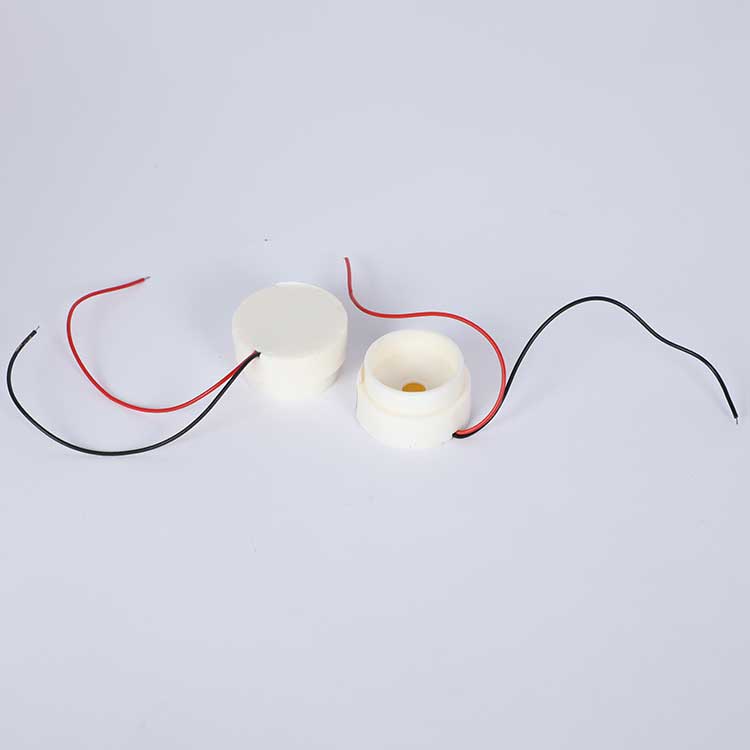
At its core, a piezoelectric buzzer consists of a piezoelectric material (usually a ceramic disc, such as lead zirconate titanate, or PZT) sandwiched between two metal electrodes. This assembly is often housed in a plastic or metal casing to protect the components and amplify sound. When an alternating electrical voltage is applied to the electrodes, the piezoelectric material deforms rapidly—expanding and contracting in sync with the voltage changes. These rapid vibrations create pressure waves in the air, which we perceive as sound.
The Science Behind Piezoelectric Buzzer : The Piezoelectric Effect
To understand how piezoelectric buzzers work, we must first explore the piezoelectric effect—the scientific principle that makes them possible. Discovered in 1880 by French physicists Jacques and Pierre Curie, this phenomenon describes the ability of certain crystalline materials to generate an electric charge when subjected to mechanical stress (such as pressure or vibration). Conversely, these materials also deform when an electric field is applied to them—a reverse effect known as the reverse piezoelectric effect.
For piezoelectric buzzers, it’s the reverse piezoelectric effect that matters. Here’s a step-by-step breakdown of how it works in the context of a buzzer:
Applying Voltage: When an alternating current (AC) or pulsed direct current (DC) is sent through the electrodes attached to the piezoelectric ceramic disc, an electric field is created.
Material Deformation: The electric field causes the ceramic material to change shape—expanding when the voltage rises and contracting when it falls.
Vibration Generation: Because the voltage alternates rapidly (typically at frequencies between 1 kHz and 5 kHz), the material vibrates back and forth hundreds or thousands of times per second.
Sound Production: These vibrations transfer to the surrounding air, creating pressure waves. Our ears detect these waves as sound, with the frequency of the vibrations determining the pitch (higher frequency = higher pitch) and the amplitude affecting the volume.
Piezoelectric Buzzer vs. Magnetic Buzzer: What’s the Difference?
While piezoelectric buzzers are widely used, they’re not the only type of buzzer on the market. Magnetic buzzers (also called electromagnetic buzzers) are a common alternative, and understanding their differences can help you choose the right component for your project.
Piezoelectric buzzers and magnetic buzzers differ primarily in their sound-generation mechanisms. Piezoelectric buzzers rely on the reverse piezoelectric effect: when alternating voltage is applied, their piezoelectric ceramic material deforms rapidly, creating vibrations that produce sound. They are energy-efficient (drawing under 15mA), compact, and deliver sharp, high-pitched tones.
Magnetic buzzers use electromagnetic induction. A coil carrying alternating current interacts with a permanent magnet, causing a diaphragm to vibrate. They consume more power (20-100mA), are slightly larger, and produce deeper, more resonant sounds. Piezoelectric types suit portable devices, while magnetic ones work better for richer audio needs like doorbells.
Piezoelectric buzzers are preferred in applications where energy efficiency, small size, and high-pitched tones are critical—such as in smoke detectors, wearables, or portable devices. Magnetic buzzers, on the other hand, are better suited for applications requiring richer, more consistent sound, like doorbells or toys.
Components of a Piezoelectric Buzzer
While piezoelectric buzzers appear simple, their design involves several key components working together to produce sound. Let’s break down their structure:
Piezoelectric Ceramic Disc: The heart of the Piezoelectric Buzzer. Made from materials like PZT (lead zirconate titanate), this disc is polarized during manufacturing to enhance its piezoelectric properties.
Electrodes: Thin metal layers (usually silver or nickel) applied to both sides of the ceramic disc. They conduct the electrical voltage to the material, triggering deformation.
Diaphragm: A thin metal or plastic plate attached to the ceramic disc. It amplifies the vibrations, increasing the sound pressure level (SPL) emitted by the buzzer.
Housing/Casing: A protective enclosure (often plastic or metal) that shields the internal components from dust, moisture, and physical damage. It may also be designed to direct sound outward, boosting volume.
Leads or Terminals: Metal wires or pins that connect the buzzer to an external circuit, allowing voltage to flow to the electrodes.
Key Specifications to Consider When Choosing a Piezoelectric Buzzer
Not all piezoelectric buzzers are created equal. To select the right one for your project, pay attention to these critical specifications:
Operating Voltage: Most piezoelectric buzzers work with 3V to 250V, but common hobby models use 3V, 5V, or 9V. Always match the voltage to your power supply.
Current Draw: Typically less than 15mA, making them ideal for battery-powered devices.
Sound Pressure Level (SPL): Measured in decibels (dB), this indicates loudness. Values range from 60dB (quiet, like a conversation) to 115dB (loud, like a power drill).
Frequency Range: Determines pitch. Most buzzers operate between 1kHz and 5kHz, but some are designed for ultrasonic frequencies (above 20kHz) for applications like pest control.
Size: Diameters range from 10mm to 50mm, with thicknesses from 2mm to 20mm. Choose a size that fits your project’s enclosure.
IP Rating: For outdoor or wet environments (e.g., garden alarms), look for buzzers with IP65 or higher ratings (water and dust resistance).
Applications of Piezoelectric Buzzers
Piezoelectric buzzers are used in countless devices and industries, thanks to their small size, low power usage, and versatility. Here are some common applications:
Consumer Electronics: Microwaves, washing machines, and coffee makers use buzzers to signal cycle completion. Phones and tablets use them for notifications and ringtones.
Safety and Alarms: Smoke detectors, carbon monoxide alarms, and burglar systems rely on loud piezoelectric buzzers to alert users to dangers.
Automotive: Cars use them for reverse parking alerts, seatbelt reminders, and dashboard warnings.
Medical Devices: Blood pressure monitors, insulin pumps, and hospital call systems use buzzers to indicate readings or alerts.
Industrial Equipment: Factory machinery uses buzzers to signal malfunctions or process completion, ensuring worker safety.
Toys and Gadgets: Electronic toys, gaming controllers, and DIY projects often include piezoelectric buzzers for interactive sounds.
Conclusion
Piezoelectric buzzers may be small, but they play a big role in modern life. By leveraging the piezoelectric effect—converting electrical energy into mechanical vibrations—they produce sound efficiently, reliably, and at a low cost. Whether you’re building a DIY alarm, repairing a household appliance, or simply curious about how everyday devices work, understanding piezoelectric buzzers unlocks a world of practical electronics knowledge.




Recent News
1.What's the Difference Between Piezo Buzzers and Electromagnetic Buzzers?
2023-03-232.Piezo Buzzer - The Power Behind the Sound
2023-03-243.What is the lifespan of smd piezo buzzer?
2023-03-284.How loud can a smd piezo buzzer be?
2023-05-045.How to Choose a High-Quality Piezo Buzzer China?
2023-06-156.Small Piezo Buzzer: How to Use and Connect It Correctly
2023-07-13